
- Buy Crypto
- Markets
 Futures
- Spot
- Copy Trade
 Earn
Earn- More
Silk Road Founder Ross Ulbricht Interview: What Was My Life in Prison Like Before Being Pardoned by Trump? | In-Depth Conversation

Original Interview: Bitcoin Magazine;
Guest: Ross Ulbricht, Founder of Silk Road;
Original Translation: Ashley, BlockBeats
Editor's Note: This interview took place in 2021, marking the first public statement by Silk Road founder Ross Ulbricht since the closure of the website. During the call, he reflected on the original intent behind creating Silk Road, expressed his belief in freedom and privacy, and deeply apologized for the consequences that followed. Ross described his painful experiences in prison and concluded the interview by once again expressing his strong hope for the future of Bitcoin. This interview is not only his personal plea but also a call for social justice and human dignity.
The following is the original content (slightly edited for better readability):
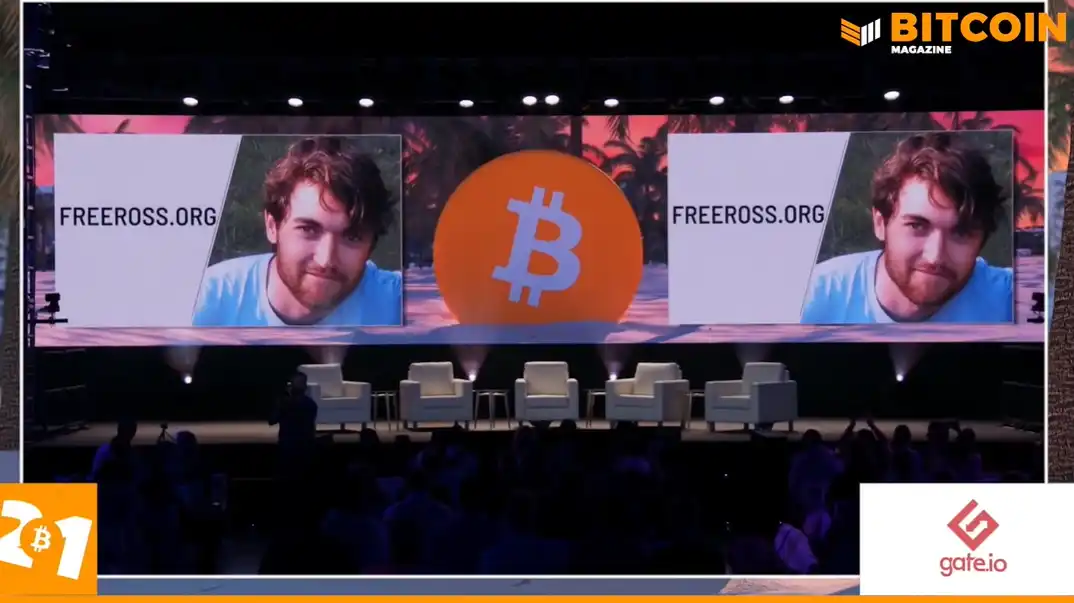
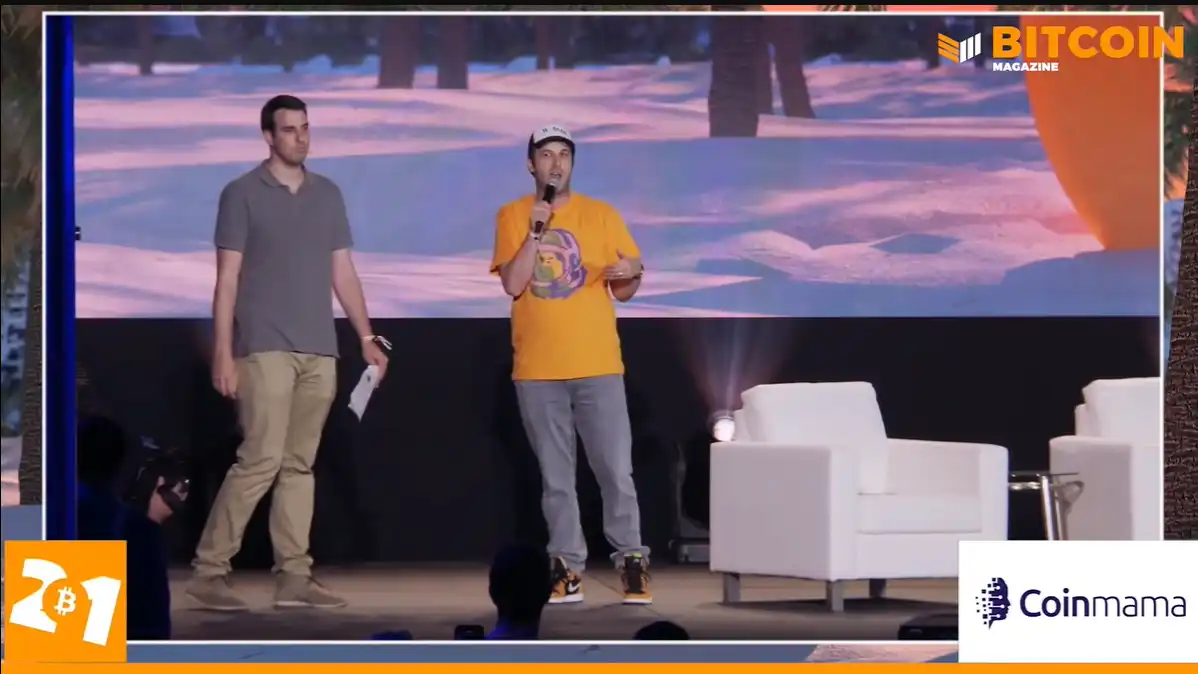
David Bailey (Bitcoin Magazine): I'd like to introduce Peter Chawaga from the Bitcoin Magazine team. I must say, it's a great honor to have the opportunity to interview our next guest. This is his first interview with Bitcoin Magazine, truly a historic moment. I'm extremely proud of Peter's work. Also, if you don't have tissues, please get them now because by the end, you might cry, okay?
Peter Chawaga (Bitcoin Magazine): Thank you, David. Today, we've discussed many exciting topics and revisited the various amazing stories surrounding Bitcoin over the years. But this part is truly special. So I thank you all for being here, and I really feel this moment deserves all the attention. So before we play the recording, I've prepared a statement to introduce the content to everyone. Like many in the room, my first encounter with Bitcoin's real-world application was through a platform called Silk Road. It went live in 2011, a website accessed through IP-obfuscating software where users could buy and sell goods in a censorship-resistant manner. It quickly became Bitcoin's first major use case, perfectly in line with many of the unique features of Bitcoin that we celebrate and are proud of today. It provided users with a free, open, and censorship-resistant market.
The founder of Silk Road was a 26-year-old libertarian, a research scientist, entrepreneur, and early Bitcoin adopter named Ross Ulbricht. Less than three years after the website went live, it was shut down, and Ross was arrested by federal authorities. Despite being a first-time offender and not convicted of a violent crime, he was sentenced to two life sentences plus 40 years. He has now served nearly eight years. Earlier this week, I had the opportunity to interview Ross from prison, and today we will share the recording of that interview. This is Ross's first public comment via phone since Silk Road's closure.
Before we begin, I'd like to share my personal impressions from talking to Ross. My impression of him is that he is a kind, gentle, and surprisingly positive person, especially given his circumstances. He did not give me any impression of violent crime, yet the media often portrays him as such. When you hear his voice, I know Ross is a legendary figure in this circle and the broader field, but I want you all to remember he is a flesh-and-blood person. He faces the possibility of never gaining freedom, but he maintains hope and strength in a way that has left a deep impression on me. So, now please listen to this recording, I hope you enjoy.
Ross Ulbricht: Hello.
Peter Chawaga (Bitcoin Magazine): Hello Ross, this is Peter from Bitcoin Magazine.
Ross Ulbricht: Hello, I'm Ross Ulbricht, calling you today from a federal maximum-security prison. We don't have much time today, and I'm not sure if there will be another opportunity to talk like this. I'll try to say as much as I can, but when time's up, I'll have to hang up and go back to my cell. I have lost my freedom, and that's what I want to talk to you about today. I want you to understand what losing freedom means. But first, let's talk about Bitcoin.
I was involved in the early development of Bitcoin. Back then, Bitcoin made me feel like anything was possible. Bitcoin was for everyone, and that's why I liked it the most. It felt like it put everyone on an equal footing. When the concept of Bitcoin truly dawned on me, I was thrilled. I thought through Bitcoin, I could try to do something truly meaningful. By the way, before I went to jail, there weren't as many cryptocurrencies, tokens, and various blockchains as there are now. I missed all of that. So for me, it's all one thing: forks, new blockchains, all of that. When I say Bitcoin, I don't differentiate among these. It may sound cliché, but to me, we are family.
At that time, I was very excited but also very impatient. I saw potential in Bitcoin for freedom and equality, but I didn't take the time to truly understand its principles, such as immutability, consensus, and of course, decentralization. I had many grand dreams for Bitcoin, and these dreams are slowly coming true today. It's because of you, you are making those dreams a reality. You are doing what I didn't have the patience to do back then. Over the past eight years, I have been amazed time and time again by the progress we have made.
However, at that time, I was too impatient. I rushed into my first idea—the Silk Road. It was a website I created when I was 26, which is now over a decade ago. It used Bitcoin to protect people's privacy. I called it an anonymous marketplace. Back then, I thought, if Bitcoin could make payments anonymous and private, why were we waiting? Why just talk about it? Let's take action! It was the impulsive act of a 26-year-old who thought he had to save the world before anyone else. I didn't know if the Silk Road would be successful, but now we all know that it did become popular. It was used for drug trafficking, and I ended up in prison because of it. I was sentenced to two consecutive life terms without parole plus 40 years. I was a non-violent first-time offender, but none of that mattered. I would have to spend the next few decades, or even longer, in this cell until someday in a century, I would grow old and die in prison, finally leaving in a body bag.
A few days ago, I received a letter from a stranger. He thanked me for launching the Silk Road back then. He believed that without the Silk Road, Bitcoin couldn't have developed to where it is today. I'm not sure. But for better or for worse, the Silk Road has become a part of Bitcoin's history. Yet, I also worry that by launching the Silk Road, I may have made our path even more difficult. We will never know how things would have been different if history had taken another course, but I want to say that if my actions have made our journey harder, I am sorry. If my actions led to drug abuse and addiction, I am sorry. I was just trying to do a good thing, trying to help us move towards a freer, more equal world. But as we all know, the road to hell is often paved with good intentions. And now, here I am in hell.
I want you to understand what losing freedom means. Let me start with the "SHU." It goes by many names—“the hole,” “segregated housing,” “the box”—but to me, it's “the abyss.” The abyss is the prison within a prison. I was once kept in the abyss for four straight months. It's not easy for me to talk about, but I will try to tell you. The abyss can break a person or remake them. There was a time when I felt my mind slipping. I felt the walls closing in on me, and I felt like I had to get out of that small room. This feeling persisted for days, and then I started pounding on the walls, kicking the thick iron door. Deep inside, there was a yearning for freedom crying out. I couldn't accept being there or what was happening to me.
But eventually, I realized I had to pull myself together. This pressure was destroying me. It may sound strange, but what saved me was gratitude. What could I be grateful for in such a small room? Well, I had air, right? Maybe it was stale air, but I could still breathe. I had water to drink, though it might not be clean, it didn't make me sick. Food would come through a small slot in the door every day. I knew I wasn't forgotten. My family, I knew they were still waiting for me, and someday all this would end, and my family would still be there.
I have forgiven everyone who has brought my life to this point. I had to do it. Because anger cannot hurt them, it can only hurt me, so I have to let go. I had a dream in the abyss, dreaming that I was free. I was in a park, feeling a tremendous sense of relief. I was no longer imprisoned. But then I started to worry, was I released on bail? Will they put me back in? I started to think about escape, and that anxiety woke me up. When I woke up, I was back in the abyss. At that moment, everything that had happened to me—life imprisonment, maximum security prison, months of solitary confinement—all came crashing down on me all at once.
I want you to understand what losing freedom really means. After I was sentenced, my mother went on a tour in Europe, speaking about my ordeal and seeking help. During her time in Poland, she started feeling unwell and had to return home early. The next morning, I called my sister from prison. As soon as she answered the phone, she said, "You don't know about Mom, do you?" I asked her, "What happened to Mom?" She answered in a voice that shook me to the core, "Oh, Ross, Ross, Ross." Upon hearing this, I immediately understood that my sister might be telling me that our mother had passed away.
But then she continued, "Mom is in the hospital." When I heard that, I breathed a sigh of relief, thinking, "Thank goodness, she's not dead." But then I thought, "In the hospital, that's also not good news." In fact, my mother's heart stopped during breakfast, and my uncle performed CPR to save her. She was then rushed to the hospital. When I called, she was still in a coma in the hospital, and we didn't know if she would survive or if there would be brain damage. Although no one said it directly, I knew it was my fault. From the day I was arrested, she had not had a day of rest in two years. She worked tirelessly every day for my freedom, enduring immense pressure until her body couldn't take it anymore.
The doctor said she had a condition called "stress-induced cardiomyopathy," I call it "broken heart syndrome." I broke my mother's heart and nearly killed her. The pain I brought to my family is indescribable. When I took the risk initially, I did not consider them enough. Thank God, my mother made a full recovery. Eight years have passed, and she still works for me every day. But the whole ordeal, my imprisonment, was devastating for her. The same goes for my fiancée, my father, my sister, and the whole family. They are all suffering.
I want you to understand that losing freedom is not just being locked in a cage, nor is the devastating blow this imprisonment brings to your family. Locking a person in a cage until they die is the cruelest torture of a person. In order for the public to accept such punishment, people must be convinced to believe that this person is evil, an inhuman existence. After my arrest, a prisoner came up to me holding a magazine. He said to me, "Ross, they wrote an article about you in the magazine." I opened the article and saw an illustration. The face in the drawing had similar features to mine, but the skin was waxen yellow, the eyes bloodshot, and my body bent like a monster. I couldn't face that image, so I threw the magazine aside. I felt a pain in my chest as if it were being torn apart by claws.
The prisoner said, "At least see what they are saying." I asked him, "Why? Why listen to others slander you, lie, and not be able to refute?" He fell silent. Later that day, he told me that they had also treated him this way, smearing him on national television news. It was an article in the local newspaper, but to each one of us, it was the same. That's why I didn't want to read it. He tore that article out, shredded it into pieces, and threw it into the trash can. He said, "I don't want to read it either." That meant a lot to me. He said, "I don't want to read it either." This gave me hope—hope that you won't see me as a monster.
They have portrayed me as a violent drug lord, but that's not who I am. It's a lie, a carefully crafted lie, used to justify locking me up until death. This lie is meant to make you indifferent towards me, to close your hearts to me. They lied in court records, they cheated, there is a record of it. They stole, two detectives ended up in jail for it. These are all documented facts. They tampered with evidence, destroyed evidence, and planted false evidence. These are all on record.
At one point, they even researched how to sentence me to death. They considered injecting chemical agents into my veins to stop my heart. I once dreamt of a person holding a syringe aimed at my chin, getting closer and closer. I was backed against a wall, every muscle tensed, trying to escape. When the syringe's needle tip almost touched my skin, I woke up. Upon waking, I found myself holding the same tense posture from the dream, gasping for air, heart pounding. I could still feel the needle inching closer in my fear.
Do you begin to understand what losing freedom means? It means living in constant fear. So why did it take me so many years to speak to you? Because I was afraid. Even now, I am strongly warned against speaking to you. They tell me it will only enrage the authorities, making the tiny bit of chance I have left in court disappear completely. I don't intend to anger anyone, yes, I am afraid. Afraid of retaliation, afraid that because of speaking to you today, I will be thrown back into the 'abyss' or face even worse. But I've learned that blindly obeying fear can be as dangerous as completely ignoring it. Eight years have quietly slipped by. In these eight years, I tried to block out those lies, focus only on surviving each day, and stay strong for my family. But today, right now, I want to convey a message to those who care about me and those who mindlessly repeat those lies: please stop. You are hurting me. Please stop. You know what you are saying is not true. You are hurting me and my family. Please stop.
I want you to understand what losing freedom means. Ironically, when I created the 'Silk Road,' it was because I wanted to advance what I care about—freedom, privacy, and equality. But because of the 'Silk Road,' I ended up in a place where these values don't exist. I am not the only one. The prison is filled with people who should not be incarcerated. We are mothers, fathers, sisters, brothers, but in your eyes, we are depicted as monsters, deprived of our human dignity.
However, there is Bitcoin. From the first block of the blockchain, Bitcoin has been changing the world. Let me tell you one thing: we are just getting started. Every time Bitcoin is accepted somewhere in the world, freedom and equality follow. Bitcoin is a symbol of freedom.
Now look at the situation we are in. On one side is lost freedom, despair, and darkness; on the other side is Bitcoin, freedom, equality, and hope. These two cannot coexist, so the darkness must be concealed, ignored. But please hear me, I am shouting to you from that darkness. This is a cry for help. My mother cannot do it all alone. I am crying out not just for myself, but for all of us. We need your help. We need you to see a stark contrast between free Bitcoin and imprisonment until death. Today, now, we have a choice. Are we going to ignore what is happening? Ignore the loss of freedom? Ignore the dehumanizing treatment? Or are we going to wake up?
Listen, Bitcoin is powerful, Bitcoin has power. We also have power, but our work is not done. It is time to wake up, it is time to take the next step. In the past eight years, I have witnessed the growth of Bitcoin. I have seen incredible innovation, seen inspiring courage. In the early days of Bitcoin, we did not know how it would develop. But over the years, you have made me admire you immensely time and time again. You make me proud, and I have no doubt, we can achieve any goal.
We are changing the global economy, bringing the breath of freedom and equality to every corner of the world. I know we can also change the criminal justice system. Today, I challenge you to look at the most difficult issues. I challenge you to illuminate those darkest corners with the light of Bitcoin. I challenge you to let us gain freedom.
I have seen some of my friends come home after serving many years or even decades in prison. Some have even been released from life sentences. Every time something like this happens, I am moved to tears. Seeing a person regain freedom, seeing them reunite with their family, the feeling is unparalleled. It is beautiful, and painful, like a miracle. We need more miracles.
I will hang up soon. But I don't want to leave. I don't want to go back to that cell. I want to be with you. Today, talking to you is the greatest freedom I have felt in a long time. Thank you, thank you for your attention. I will never forget this day. The memory of this day can never be taken away.
Well, I have to go now. Thank you, goodbye.
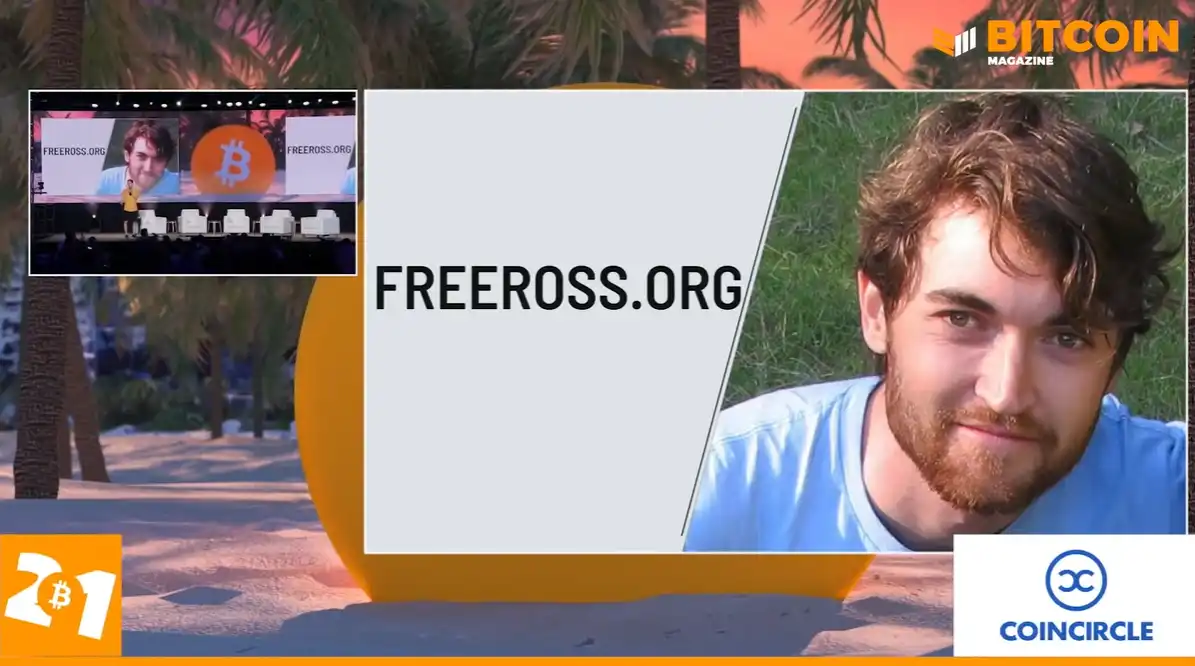
(Audience Applause)
David Bailey (Bitcoin Magazine): Ladies and gentlemen, today we are truly fortunate. Lyn (Ross's mother) is also here with us. If you see her, please give her a hug for Ross, for all of us. This is what Bitcoin is all about — it's about freedom, about freeing Ross. We owe it to him, and we owe this world a fair judgment. Please applaud for Ross, for this moment we have today. Thank you.
You may also like

Token Cannot Compound, Where Is the Real Investment Opportunity?

February 6th Market Key Intelligence, How Much Did You Miss?

China's Central Bank and Eight Other Departments' Latest Regulatory Focus: Key Attention to RWA Tokenized Asset Risk
Foreword: Today, the People's Bank of China's website published the "Notice of the People's Bank of China, National Development and Reform Commission, Ministry of Industry and Information Technology, Ministry of Public Security, State Administration for Market Regulation, China Banking and Insurance Regulatory Commission, China Securities Regulatory Commission, State Administration of Foreign Exchange on Further Preventing and Dealing with Risks Related to Virtual Currency and Others (Yinfa [2026] No. 42)", the latest regulatory requirements from the eight departments including the central bank, which are basically consistent with the regulatory requirements of recent years. The main focus of the regulation is on speculative activities such as virtual currency trading, exchanges, ICOs, overseas platform services, and this time, regulatory oversight of RWA has been added, explicitly prohibiting RWA tokenization, stablecoins (especially those pegged to the RMB). The following is the full text:
To the people's governments of all provinces, autonomous regions, and municipalities directly under the Central Government, the Xinjiang Production and Construction Corps:
Recently, there have been speculative activities related to virtual currency and Real-World Assets (RWA) tokenization, disrupting the economic and financial order and jeopardizing the property security of the people. In order to further prevent and address the risks related to virtual currency and Real-World Assets tokenization, effectively safeguard national security and social stability, in accordance with the "Law of the People's Republic of China on the People's Bank of China," "Law of the People's Republic of China on Commercial Banks," "Securities Law of the People's Republic of China," "Law of the People's Republic of China on Securities Investment Funds," "Law of the People's Republic of China on Futures and Derivatives," "Cybersecurity Law of the People's Republic of China," "Regulations of the People's Republic of China on the Administration of Renminbi," "Regulations on Prevention and Disposal of Illegal Fundraising," "Regulations of the People's Republic of China on Foreign Exchange Administration," "Telecommunications Regulations of the People's Republic of China," and other provisions, after reaching consensus with the Cyberspace Administration of China, the Supreme People's Court, and the Supreme People's Procuratorate, and with the approval of the State Council, the relevant matters are notified as follows:
(I) Virtual currency does not possess the legal status equivalent to fiat currency. Virtual currencies such as Bitcoin, Ether, Tether, etc., have the main characteristics of being issued by non-monetary authorities, using encryption technology and distributed ledger or similar technology, existing in digital form, etc. They do not have legal tender status, should not and cannot be circulated and used as currency in the market.
The business activities related to virtual currency are classified as illegal financial activities. The exchange of fiat currency and virtual currency within the territory, exchange of virtual currencies, acting as a central counterparty in buying and selling virtual currencies, providing information intermediary and pricing services for virtual currency transactions, token issuance financing, and trading of virtual currency-related financial products, etc., fall under illegal financial activities, such as suspected illegal issuance of token vouchers, unauthorized public issuance of securities, illegal operation of securities and futures business, illegal fundraising, etc., are strictly prohibited across the board and resolutely banned in accordance with the law. Overseas entities and individuals are not allowed to provide virtual currency-related services to domestic entities in any form.
A stablecoin pegged to a fiat currency indirectly fulfills some functions of the fiat currency in circulation. Without the consent of relevant authorities in accordance with the law and regulations, any domestic or foreign entity or individual is not allowed to issue a RMB-pegged stablecoin overseas.
(II)Tokenization of Real-World Assets refers to the use of encryption technology and distributed ledger or similar technologies to transform ownership rights, income rights, etc., of assets into tokens (tokens) or other interests or bond certificates with token (token) characteristics, and carry out issuance and trading activities.
Engaging in the tokenization of real-world assets domestically, as well as providing related intermediary, information technology services, etc., which are suspected of illegal issuance of token vouchers, unauthorized public offering of securities, illegal operation of securities and futures business, illegal fundraising, and other illegal financial activities, shall be prohibited; except for relevant business activities carried out with the approval of the competent authorities in accordance with the law and regulations and relying on specific financial infrastructures. Overseas entities and individuals are not allowed to illegally provide services related to the tokenization of real-world assets to domestic entities in any form.
(III) Inter-agency Coordination. The People's Bank of China, together with the National Development and Reform Commission, the Ministry of Industry and Information Technology, the Ministry of Public Security, the State Administration for Market Regulation, the China Banking and Insurance Regulatory Commission, the China Securities Regulatory Commission, the State Administration of Foreign Exchange, and other departments, will improve the work mechanism, strengthen coordination with the Cyberspace Administration of China, the Supreme People's Court, and the Supreme People's Procuratorate, coordinate efforts, and overall guide regions to carry out risk prevention and disposal of virtual currency-related illegal financial activities.
The China Securities Regulatory Commission, together with the National Development and Reform Commission, the Ministry of Industry and Information Technology, the Ministry of Public Security, the People's Bank of China, the State Administration for Market Regulation, the China Banking and Insurance Regulatory Commission, the State Administration of Foreign Exchange, and other departments, will improve the work mechanism, strengthen coordination with the Cyberspace Administration of China, the Supreme People's Court, and the Supreme People's Procuratorate, coordinate efforts, and overall guide regions to carry out risk prevention and disposal of illegal financial activities related to the tokenization of real-world assets.
(IV) Strengthening Local Implementation. The people's governments at the provincial level are overall responsible for the prevention and disposal of risks related to virtual currencies and the tokenization of real-world assets in their respective administrative regions. The specific leading department is the local financial regulatory department, with participation from branches and dispatched institutions of the State Council's financial regulatory department, telecommunications regulators, public security, market supervision, and other departments, in coordination with cyberspace departments, courts, and procuratorates, to improve the normalization of the work mechanism, effectively connect with the relevant work mechanisms of central departments, form a cooperative and coordinated working pattern between central and local governments, effectively prevent and properly handle risks related to virtual currencies and the tokenization of real-world assets, and maintain economic and financial order and social stability.
(5) Enhanced Risk Monitoring. The People's Bank of China, China Securities Regulatory Commission, National Development and Reform Commission, Ministry of Industry and Information Technology, Ministry of Public Security, State Administration of Foreign Exchange, Cyberspace Administration of China, and other departments continue to improve monitoring techniques and system support, enhance cross-departmental data analysis and sharing, establish sound information sharing and cross-validation mechanisms, promptly grasp the risk situation of activities related to virtual currency and real-world asset tokenization. Local governments at all levels give full play to the role of local monitoring and early warning mechanisms. Local financial regulatory authorities, together with branches and agencies of the State Council's financial regulatory authorities, as well as departments of cyberspace and public security, ensure effective connection between online monitoring, offline investigation, and fund tracking, efficiently and accurately identify activities related to virtual currency and real-world asset tokenization, promptly share risk information, improve early warning information dissemination, verification, and rapid response mechanisms.
(6) Strengthened Oversight of Financial Institutions, Intermediaries, and Technology Service Providers. Financial institutions (including non-bank payment institutions) are prohibited from providing account opening, fund transfer, and clearing services for virtual currency-related business activities, issuing and selling financial products related to virtual currency, including virtual currency and related financial products in the scope of collateral, conducting insurance business related to virtual currency, or including virtual currency in the scope of insurance liability. Financial institutions (including non-bank payment institutions) are prohibited from providing custody, clearing, and settlement services for unauthorized real-world asset tokenization-related business and related financial products. Relevant intermediary institutions and information technology service providers are prohibited from providing intermediary, technical, or other services for unauthorized real-world asset tokenization-related businesses and related financial products.
(7) Enhanced Management of Internet Information Content and Access. Internet enterprises are prohibited from providing online business venues, commercial displays, marketing, advertising, or paid traffic diversion services for virtual currency and real-world asset tokenization-related business activities. Upon discovering clues of illegal activities, they should promptly report to relevant departments and provide technical support and assistance for related investigations and inquiries. Based on the clues transferred by the financial regulatory authorities, the cyberspace administration, telecommunications authorities, and public security departments should promptly close and deal with websites, mobile applications (including mini-programs), and public accounts engaged in virtual currency and real-world asset tokenization-related business activities in accordance with the law.
(8) Strengthened Entity Registration and Advertisement Management. Market supervision departments strengthen entity registration and management, and enterprise and individual business registrations must not contain terms such as "virtual currency," "virtual asset," "cryptocurrency," "crypto asset," "stablecoin," "real-world asset tokenization," or "RWA" in their names or business scopes. Market supervision departments, together with financial regulatory authorities, legally enhance the supervision of advertisements related to virtual currency and real-world asset tokenization, promptly investigating and handling relevant illegal advertisements.
(IX) Continued Rectification of Virtual Currency Mining Activities. The National Development and Reform Commission, together with relevant departments, strictly controls virtual currency mining activities, continuously promotes the rectification of virtual currency mining activities. The people's governments of various provinces take overall responsibility for the rectification of "mining" within their respective administrative regions. In accordance with the requirements of the National Development and Reform Commission and other departments in the "Notice on the Rectification of Virtual Currency Mining Activities" (NDRC Energy-saving Building [2021] No. 1283) and the provisions of the "Guidance Catalog for Industrial Structure Adjustment (2024 Edition)," a comprehensive review, investigation, and closure of existing virtual currency mining projects are conducted, new mining projects are strictly prohibited, and mining machine production enterprises are strictly prohibited from providing mining machine sales and other services within the country.
(X) Severe Crackdown on Related Illegal Financial Activities. Upon discovering clues to illegal financial activities related to virtual currency and the tokenization of real-world assets, local financial regulatory authorities, branches of the State Council's financial regulatory authorities, and other relevant departments promptly investigate, determine, and properly handle the issues in accordance with the law, and seriously hold the relevant entities and individuals legally responsible. Those suspected of crimes are transferred to the judicial authorities for processing according to the law.
(XI) Severe Crackdown on Related Illegal and Criminal Activities. The Ministry of Public Security, the People's Bank of China, the State Administration for Market Regulation, the China Banking and Insurance Regulatory Commission, the China Securities Regulatory Commission, as well as judicial and procuratorial organs, in accordance with their respective responsibilities, rigorously crack down on illegal and criminal activities related to virtual currency, the tokenization of real-world assets, such as fraud, money laundering, illegal business operations, pyramid schemes, illegal fundraising, and other illegal and criminal activities carried out under the guise of virtual currency, the tokenization of real-world assets, etc.
(XII) Strengthen Industry Self-discipline. Relevant industry associations should enhance membership management and policy advocacy, based on their own responsibilities, advocate and urge member units to resist illegal financial activities related to virtual currency and the tokenization of real-world assets. Member units that violate regulatory policies and industry self-discipline rules are to be disciplined in accordance with relevant self-regulatory management regulations. By leveraging various industry infrastructure, conduct risk monitoring related to virtual currency, the tokenization of real-world assets, and promptly transfer issue clues to relevant departments.
(XIII) Without the approval of relevant departments in accordance with the law and regulations, domestic entities and foreign entities controlled by them may not issue virtual currency overseas.
(XIV) Domestic entities engaging directly or indirectly in overseas external debt-based tokenization of real-world assets, or conducting asset securitization activities abroad based on domestic ownership rights, income rights, etc. (hereinafter referred to as domestic equity), should be strictly regulated in accordance with the principles of "same business, same risk, same rules." The National Development and Reform Commission, the China Securities Regulatory Commission, the State Administration of Foreign Exchange, and other relevant departments regulate it according to their respective responsibilities. For other forms of overseas real-world asset tokenization activities based on domestic equity by domestic entities, the China Securities Regulatory Commission, together with relevant departments, supervise according to their division of responsibilities. Without the consent and filing of relevant departments, no unit or individual may engage in the above-mentioned business.
(15) Overseas subsidiaries and branches of domestic financial institutions providing Real World Asset Tokenization-related services overseas shall do so legally and prudently. They shall have professional personnel and systems in place to effectively mitigate business risks, strictly implement customer onboarding, suitability management, anti-money laundering requirements, and incorporate them into the domestic financial institutions' compliance and risk management system. Intermediaries and information technology service providers offering Real World Asset Tokenization services abroad based on domestic equity or conducting Real World Asset Tokenization business in the form of overseas debt for domestic entities directly or indirectly venturing abroad must strictly comply with relevant laws and regulations. They should establish and improve relevant compliance and internal control systems in accordance with relevant normative requirements, strengthen business and risk control, and report the business developments to the relevant regulatory authorities for approval or filing.
(16) Strengthen organizational leadership and overall coordination. All departments and regions should attach great importance to the prevention of risks related to virtual currencies and Real World Asset Tokenization, strengthen organizational leadership, clarify work responsibilities, form a long-term effective working mechanism with centralized coordination, local implementation, and shared responsibilities, maintain high pressure, dynamically monitor risks, effectively prevent and mitigate risks in an orderly and efficient manner, legally protect the property security of the people, and make every effort to maintain economic and financial order and social stability.
(17) Widely carry out publicity and education. All departments, regions, and industry associations should make full use of various media and other communication channels to disseminate information through legal and policy interpretation, analysis of typical cases, and education on investment risks, etc. They should promote the illegality and harm of virtual currencies and Real World Asset Tokenization-related businesses and their manifestations, fully alert to potential risks and hidden dangers, and enhance public awareness and identification capabilities for risk prevention.
(18) Engaging in illegal financial activities related to virtual currencies and Real World Asset Tokenization in violation of this notice, as well as providing services for virtual currencies and Real World Asset Tokenization-related businesses, shall be punished in accordance with relevant regulations. If it constitutes a crime, criminal liability shall be pursued according to the law. For domestic entities and individuals who knowingly or should have known that overseas entities illegally provided virtual currency or Real World Asset Tokenization-related services to domestic entities and still assisted them, relevant responsibilities shall be pursued according to the law. If it constitutes a crime, criminal liability shall be pursued according to the law.
(19) If any unit or individual invests in virtual currencies, Real World Asset Tokens, and related financial products against public order and good customs, the relevant civil legal actions shall be invalid, and any resulting losses shall be borne by them. If there are suspicions of disrupting financial order and jeopardizing financial security, the relevant departments shall deal with them according to the law.
This notice shall enter into force upon the date of its issuance. The People's Bank of China and ten other departments' "Notice on Further Preventing and Dealing with the Risks of Virtual Currency Trading Speculation" (Yinfa [2021] No. 237) is hereby repealed.

Former Partner's Perspective on Multicoin: Kyle's Exit, But the Game He Left Behind Just Getting Started
Why Bitcoin Is Falling Now: The Real Reasons Behind BTC's Crash & WEEX's Smart Profit Playbook
Bitcoin's ongoing crash explained: Discover the 5 hidden triggers behind BTC's plunge & how WEEX's Auto Earn and Trade to Earn strategies help traders profit from crypto market volatility.

Wall Street's Hottest Trades See Exodus

Vitalik Discusses Ethereum Scaling Path, Circle Announces Partnership with Polymarket, What's the Overseas Crypto Community Talking About Today?

Believing in the Capital Markets - The Essence and Core Value of Cryptocurrency

Polymarket's 'Weatherman': Predict Temperature, Win Million-Dollar Payout

$15K+ Profits: The 4 AI Trading Secrets WEEX Hackathon Prelim Winners Used to Dominate Volatile Crypto Markets
How WEEX Hackathon's top AI trading strategies made $15K+ in crypto markets: 4 proven rules for ETH/BTC trading, market structure analysis, and risk management in volatile conditions.

A nearly 20% one-day plunge, how long has it been since you last saw a $60,000 Bitcoin?

Raoul Pal: I've seen every single panic, and they are never the end.

Key Market Information Discrepancy on February 6th - A Must-Read! | Alpha Morning Report

2026 Crypto Industry's First Snowfall
The Harsh Reality Behind the $26 Billion Crypto Liquidation: Liquidity Is Killing the Market
Why Is Gold, US Stocks, Bitcoin All Falling?

Key Market Intelligence for February 5th, how much did you miss out on?

Wintermute: By 2026, crypto had gradually become the settlement layer of the Internet economy
Token Cannot Compound, Where Is the Real Investment Opportunity?
February 6th Market Key Intelligence, How Much Did You Miss?
China's Central Bank and Eight Other Departments' Latest Regulatory Focus: Key Attention to RWA Tokenized Asset Risk
Foreword: Today, the People's Bank of China's website published the "Notice of the People's Bank of China, National Development and Reform Commission, Ministry of Industry and Information Technology, Ministry of Public Security, State Administration for Market Regulation, China Banking and Insurance Regulatory Commission, China Securities Regulatory Commission, State Administration of Foreign Exchange on Further Preventing and Dealing with Risks Related to Virtual Currency and Others (Yinfa [2026] No. 42)", the latest regulatory requirements from the eight departments including the central bank, which are basically consistent with the regulatory requirements of recent years. The main focus of the regulation is on speculative activities such as virtual currency trading, exchanges, ICOs, overseas platform services, and this time, regulatory oversight of RWA has been added, explicitly prohibiting RWA tokenization, stablecoins (especially those pegged to the RMB). The following is the full text:
To the people's governments of all provinces, autonomous regions, and municipalities directly under the Central Government, the Xinjiang Production and Construction Corps:
Recently, there have been speculative activities related to virtual currency and Real-World Assets (RWA) tokenization, disrupting the economic and financial order and jeopardizing the property security of the people. In order to further prevent and address the risks related to virtual currency and Real-World Assets tokenization, effectively safeguard national security and social stability, in accordance with the "Law of the People's Republic of China on the People's Bank of China," "Law of the People's Republic of China on Commercial Banks," "Securities Law of the People's Republic of China," "Law of the People's Republic of China on Securities Investment Funds," "Law of the People's Republic of China on Futures and Derivatives," "Cybersecurity Law of the People's Republic of China," "Regulations of the People's Republic of China on the Administration of Renminbi," "Regulations on Prevention and Disposal of Illegal Fundraising," "Regulations of the People's Republic of China on Foreign Exchange Administration," "Telecommunications Regulations of the People's Republic of China," and other provisions, after reaching consensus with the Cyberspace Administration of China, the Supreme People's Court, and the Supreme People's Procuratorate, and with the approval of the State Council, the relevant matters are notified as follows:
(I) Virtual currency does not possess the legal status equivalent to fiat currency. Virtual currencies such as Bitcoin, Ether, Tether, etc., have the main characteristics of being issued by non-monetary authorities, using encryption technology and distributed ledger or similar technology, existing in digital form, etc. They do not have legal tender status, should not and cannot be circulated and used as currency in the market.
The business activities related to virtual currency are classified as illegal financial activities. The exchange of fiat currency and virtual currency within the territory, exchange of virtual currencies, acting as a central counterparty in buying and selling virtual currencies, providing information intermediary and pricing services for virtual currency transactions, token issuance financing, and trading of virtual currency-related financial products, etc., fall under illegal financial activities, such as suspected illegal issuance of token vouchers, unauthorized public issuance of securities, illegal operation of securities and futures business, illegal fundraising, etc., are strictly prohibited across the board and resolutely banned in accordance with the law. Overseas entities and individuals are not allowed to provide virtual currency-related services to domestic entities in any form.
A stablecoin pegged to a fiat currency indirectly fulfills some functions of the fiat currency in circulation. Without the consent of relevant authorities in accordance with the law and regulations, any domestic or foreign entity or individual is not allowed to issue a RMB-pegged stablecoin overseas.
(II)Tokenization of Real-World Assets refers to the use of encryption technology and distributed ledger or similar technologies to transform ownership rights, income rights, etc., of assets into tokens (tokens) or other interests or bond certificates with token (token) characteristics, and carry out issuance and trading activities.
Engaging in the tokenization of real-world assets domestically, as well as providing related intermediary, information technology services, etc., which are suspected of illegal issuance of token vouchers, unauthorized public offering of securities, illegal operation of securities and futures business, illegal fundraising, and other illegal financial activities, shall be prohibited; except for relevant business activities carried out with the approval of the competent authorities in accordance with the law and regulations and relying on specific financial infrastructures. Overseas entities and individuals are not allowed to illegally provide services related to the tokenization of real-world assets to domestic entities in any form.
(III) Inter-agency Coordination. The People's Bank of China, together with the National Development and Reform Commission, the Ministry of Industry and Information Technology, the Ministry of Public Security, the State Administration for Market Regulation, the China Banking and Insurance Regulatory Commission, the China Securities Regulatory Commission, the State Administration of Foreign Exchange, and other departments, will improve the work mechanism, strengthen coordination with the Cyberspace Administration of China, the Supreme People's Court, and the Supreme People's Procuratorate, coordinate efforts, and overall guide regions to carry out risk prevention and disposal of virtual currency-related illegal financial activities.
The China Securities Regulatory Commission, together with the National Development and Reform Commission, the Ministry of Industry and Information Technology, the Ministry of Public Security, the People's Bank of China, the State Administration for Market Regulation, the China Banking and Insurance Regulatory Commission, the State Administration of Foreign Exchange, and other departments, will improve the work mechanism, strengthen coordination with the Cyberspace Administration of China, the Supreme People's Court, and the Supreme People's Procuratorate, coordinate efforts, and overall guide regions to carry out risk prevention and disposal of illegal financial activities related to the tokenization of real-world assets.
(IV) Strengthening Local Implementation. The people's governments at the provincial level are overall responsible for the prevention and disposal of risks related to virtual currencies and the tokenization of real-world assets in their respective administrative regions. The specific leading department is the local financial regulatory department, with participation from branches and dispatched institutions of the State Council's financial regulatory department, telecommunications regulators, public security, market supervision, and other departments, in coordination with cyberspace departments, courts, and procuratorates, to improve the normalization of the work mechanism, effectively connect with the relevant work mechanisms of central departments, form a cooperative and coordinated working pattern between central and local governments, effectively prevent and properly handle risks related to virtual currencies and the tokenization of real-world assets, and maintain economic and financial order and social stability.
(5) Enhanced Risk Monitoring. The People's Bank of China, China Securities Regulatory Commission, National Development and Reform Commission, Ministry of Industry and Information Technology, Ministry of Public Security, State Administration of Foreign Exchange, Cyberspace Administration of China, and other departments continue to improve monitoring techniques and system support, enhance cross-departmental data analysis and sharing, establish sound information sharing and cross-validation mechanisms, promptly grasp the risk situation of activities related to virtual currency and real-world asset tokenization. Local governments at all levels give full play to the role of local monitoring and early warning mechanisms. Local financial regulatory authorities, together with branches and agencies of the State Council's financial regulatory authorities, as well as departments of cyberspace and public security, ensure effective connection between online monitoring, offline investigation, and fund tracking, efficiently and accurately identify activities related to virtual currency and real-world asset tokenization, promptly share risk information, improve early warning information dissemination, verification, and rapid response mechanisms.
(6) Strengthened Oversight of Financial Institutions, Intermediaries, and Technology Service Providers. Financial institutions (including non-bank payment institutions) are prohibited from providing account opening, fund transfer, and clearing services for virtual currency-related business activities, issuing and selling financial products related to virtual currency, including virtual currency and related financial products in the scope of collateral, conducting insurance business related to virtual currency, or including virtual currency in the scope of insurance liability. Financial institutions (including non-bank payment institutions) are prohibited from providing custody, clearing, and settlement services for unauthorized real-world asset tokenization-related business and related financial products. Relevant intermediary institutions and information technology service providers are prohibited from providing intermediary, technical, or other services for unauthorized real-world asset tokenization-related businesses and related financial products.
(7) Enhanced Management of Internet Information Content and Access. Internet enterprises are prohibited from providing online business venues, commercial displays, marketing, advertising, or paid traffic diversion services for virtual currency and real-world asset tokenization-related business activities. Upon discovering clues of illegal activities, they should promptly report to relevant departments and provide technical support and assistance for related investigations and inquiries. Based on the clues transferred by the financial regulatory authorities, the cyberspace administration, telecommunications authorities, and public security departments should promptly close and deal with websites, mobile applications (including mini-programs), and public accounts engaged in virtual currency and real-world asset tokenization-related business activities in accordance with the law.
(8) Strengthened Entity Registration and Advertisement Management. Market supervision departments strengthen entity registration and management, and enterprise and individual business registrations must not contain terms such as "virtual currency," "virtual asset," "cryptocurrency," "crypto asset," "stablecoin," "real-world asset tokenization," or "RWA" in their names or business scopes. Market supervision departments, together with financial regulatory authorities, legally enhance the supervision of advertisements related to virtual currency and real-world asset tokenization, promptly investigating and handling relevant illegal advertisements.
(IX) Continued Rectification of Virtual Currency Mining Activities. The National Development and Reform Commission, together with relevant departments, strictly controls virtual currency mining activities, continuously promotes the rectification of virtual currency mining activities. The people's governments of various provinces take overall responsibility for the rectification of "mining" within their respective administrative regions. In accordance with the requirements of the National Development and Reform Commission and other departments in the "Notice on the Rectification of Virtual Currency Mining Activities" (NDRC Energy-saving Building [2021] No. 1283) and the provisions of the "Guidance Catalog for Industrial Structure Adjustment (2024 Edition)," a comprehensive review, investigation, and closure of existing virtual currency mining projects are conducted, new mining projects are strictly prohibited, and mining machine production enterprises are strictly prohibited from providing mining machine sales and other services within the country.
(X) Severe Crackdown on Related Illegal Financial Activities. Upon discovering clues to illegal financial activities related to virtual currency and the tokenization of real-world assets, local financial regulatory authorities, branches of the State Council's financial regulatory authorities, and other relevant departments promptly investigate, determine, and properly handle the issues in accordance with the law, and seriously hold the relevant entities and individuals legally responsible. Those suspected of crimes are transferred to the judicial authorities for processing according to the law.
(XI) Severe Crackdown on Related Illegal and Criminal Activities. The Ministry of Public Security, the People's Bank of China, the State Administration for Market Regulation, the China Banking and Insurance Regulatory Commission, the China Securities Regulatory Commission, as well as judicial and procuratorial organs, in accordance with their respective responsibilities, rigorously crack down on illegal and criminal activities related to virtual currency, the tokenization of real-world assets, such as fraud, money laundering, illegal business operations, pyramid schemes, illegal fundraising, and other illegal and criminal activities carried out under the guise of virtual currency, the tokenization of real-world assets, etc.
(XII) Strengthen Industry Self-discipline. Relevant industry associations should enhance membership management and policy advocacy, based on their own responsibilities, advocate and urge member units to resist illegal financial activities related to virtual currency and the tokenization of real-world assets. Member units that violate regulatory policies and industry self-discipline rules are to be disciplined in accordance with relevant self-regulatory management regulations. By leveraging various industry infrastructure, conduct risk monitoring related to virtual currency, the tokenization of real-world assets, and promptly transfer issue clues to relevant departments.
(XIII) Without the approval of relevant departments in accordance with the law and regulations, domestic entities and foreign entities controlled by them may not issue virtual currency overseas.
(XIV) Domestic entities engaging directly or indirectly in overseas external debt-based tokenization of real-world assets, or conducting asset securitization activities abroad based on domestic ownership rights, income rights, etc. (hereinafter referred to as domestic equity), should be strictly regulated in accordance with the principles of "same business, same risk, same rules." The National Development and Reform Commission, the China Securities Regulatory Commission, the State Administration of Foreign Exchange, and other relevant departments regulate it according to their respective responsibilities. For other forms of overseas real-world asset tokenization activities based on domestic equity by domestic entities, the China Securities Regulatory Commission, together with relevant departments, supervise according to their division of responsibilities. Without the consent and filing of relevant departments, no unit or individual may engage in the above-mentioned business.
(15) Overseas subsidiaries and branches of domestic financial institutions providing Real World Asset Tokenization-related services overseas shall do so legally and prudently. They shall have professional personnel and systems in place to effectively mitigate business risks, strictly implement customer onboarding, suitability management, anti-money laundering requirements, and incorporate them into the domestic financial institutions' compliance and risk management system. Intermediaries and information technology service providers offering Real World Asset Tokenization services abroad based on domestic equity or conducting Real World Asset Tokenization business in the form of overseas debt for domestic entities directly or indirectly venturing abroad must strictly comply with relevant laws and regulations. They should establish and improve relevant compliance and internal control systems in accordance with relevant normative requirements, strengthen business and risk control, and report the business developments to the relevant regulatory authorities for approval or filing.
(16) Strengthen organizational leadership and overall coordination. All departments and regions should attach great importance to the prevention of risks related to virtual currencies and Real World Asset Tokenization, strengthen organizational leadership, clarify work responsibilities, form a long-term effective working mechanism with centralized coordination, local implementation, and shared responsibilities, maintain high pressure, dynamically monitor risks, effectively prevent and mitigate risks in an orderly and efficient manner, legally protect the property security of the people, and make every effort to maintain economic and financial order and social stability.
(17) Widely carry out publicity and education. All departments, regions, and industry associations should make full use of various media and other communication channels to disseminate information through legal and policy interpretation, analysis of typical cases, and education on investment risks, etc. They should promote the illegality and harm of virtual currencies and Real World Asset Tokenization-related businesses and their manifestations, fully alert to potential risks and hidden dangers, and enhance public awareness and identification capabilities for risk prevention.
(18) Engaging in illegal financial activities related to virtual currencies and Real World Asset Tokenization in violation of this notice, as well as providing services for virtual currencies and Real World Asset Tokenization-related businesses, shall be punished in accordance with relevant regulations. If it constitutes a crime, criminal liability shall be pursued according to the law. For domestic entities and individuals who knowingly or should have known that overseas entities illegally provided virtual currency or Real World Asset Tokenization-related services to domestic entities and still assisted them, relevant responsibilities shall be pursued according to the law. If it constitutes a crime, criminal liability shall be pursued according to the law.
(19) If any unit or individual invests in virtual currencies, Real World Asset Tokens, and related financial products against public order and good customs, the relevant civil legal actions shall be invalid, and any resulting losses shall be borne by them. If there are suspicions of disrupting financial order and jeopardizing financial security, the relevant departments shall deal with them according to the law.
This notice shall enter into force upon the date of its issuance. The People's Bank of China and ten other departments' "Notice on Further Preventing and Dealing with the Risks of Virtual Currency Trading Speculation" (Yinfa [2021] No. 237) is hereby repealed.
Former Partner's Perspective on Multicoin: Kyle's Exit, But the Game He Left Behind Just Getting Started
Why Bitcoin Is Falling Now: The Real Reasons Behind BTC's Crash & WEEX's Smart Profit Playbook
Bitcoin's ongoing crash explained: Discover the 5 hidden triggers behind BTC's plunge & how WEEX's Auto Earn and Trade to Earn strategies help traders profit from crypto market volatility.


 App
App