
- Buy Crypto
- Markets
 Futures
- Spot
- Copy Trade
- Earn
- More
Synthetix Plans $27M Token Deal to Acquire Derive
By: crypto news flash|2025/05/15 17:15:05
0
Share
Synthetix proposed a $27M token swap to acquire Derive and unify their teams, tokens, and governance under one ecosystem.The proposal includes a token vesting plan and aims to dominate Ethereum’s derivatives space through full integration.Synthetix has announced plans to fully acquire Derive, the perps and options platform formerly known as Lyra. The proposal involves a token swap worth approximately $27 million at a ratio of 27 DRV to 1 SNX. Imagine these two derivatives players coming together in one place—not just adding power, but also combining liquidity, teams, and code.That’s also likely what caused the SNX price to soar over 10%, hitting the $0.94 range just hours after the announcement. The market reaction? Clearly, it’s an aggressive but well-directed move.As part of our full-force drive towards Synthetix v4 on Ethereum mainnet, a new proposal has just dropped: Synthetix to acquire @derivexyz Perps & options Exchange https://t.co/wC7jRyCJqR... Let’s break it down (1/6) — Synthetix (@synthetix_io) May 14, 2025Synthetix Maps Out a Deep Merge With DeriveOn the technical side, new SNX will be minted to replace DRV tokens. The distribution schedule is a three-month full lockup, followed by a gradual vesting over the next nine months.Should it be approved, every component of Derive—including the finance and governance structure—will be combined into Synthetix. A single path for total dominance on the Ethereum mainnet, not just a traditional merger.Closing Loopholes While Rebuilding From WithinOn the other hand, in January, Synthetix had already closed the V3 version of the perpetual market on the Arbitrum network. They decided to focus fully on the Base network for the sake of system simplification and more efficient development. This decision may seem trivial, but if you draw a straight line, everything seems like part of a big plan that was built in stages.However, not everything went smoothly. In April, CNF reported that their algorithmic stablecoin, sUSD, had lost its $1 peg and dropped drastically to $0.68. The cause? A system transition that affected the debt balance mechanism.To address this issue, Synthetix launched what they called the “sUSD 420 Pool”—a kind of liquidity pool with incentives for users to deposit sUSD and help stabilize the price. This move was a signal that they were aware of the loopholes in the system and were trying to close them openly.Moreover, the security audit they finished on December 15, 2024 helped to boost the confidence of the market in Synthetix. No significant weaknesses or dangerous loopholes were discovered. Security is the main concern, hence this is especially crucial for protocols aiming for institutional users or whales.On the other hand, while Derive has a strong track record in the options space, there has been some drama within its community. Some question whether the exchange’s valuation is fair, while others feel the move could actually boost Derive’s chances of becoming relevant again—with the ammunition and support of Synthetix, which already has a mature ecosystem.
You may also like

The second half of stablecoins no longer belongs to the crypto circle
What Coinbase doesn't want, Mastercard is eager to buy.

Cursor "Shell" Kimi Controversy Reversed: From Copyright Infringement Allegations to Authorized Collaboration, China's Open Source Model Once Again Becomes a Global AI Foundation
Cursor was accused of being based on Kimi K2.5, which sparked controversy, and was later confirmed to be compliant through Fireworks AI due diligence.

The Real Reason Tokens Don't Sell: 90% of Crypto Projects Overlook Investor Relations
Provide an Investor Relations Best Practices Guide for Crypto Projects.

Is the income of pump.fun real, earning a million dollars a day despite the market downturn?
If it can really earn this much, what is the reason for the low price of $PUMP?

The real reason why tokens are not selling: 90% of crypto projects neglect investor relations
Investor Relations Practice Guide for Cryptocurrency Projects.

Who is the true winner of the "Tokenization" narrative?
Virtually everyone benefits, but the reason for the benefit, the timing, and the underlying logic are completely different.

Moss: The Era of AI-Traded by Anyone | Project Introduction
AI Trading Agent is rapidly growing its infrastructure.

Chip Smuggling Case Exposes Regulatory Loophole | Rewire News Evening Update
AI chips have become a strategic asset more sensitive than missiles

How a Structured AI Crypto Trading Bot Won at the WEEX Hackathon
Ritmex demonstrates how disciplined risk control and structured signals can make an AI crypto trading bot more stable and reliable on WEEX, highlighting the importance of combining execution discipline with scalable AI trading systems.

Old Indicator Fails, Three Major New Signals Emerge: BTC True Bottom May Still Be Below $60K
When the grocery shopping auntie on the subway, or Tony the hairdresser, start asking you about BTC, crypto, and cryptocurrency investments, selling immediately will be the only best option.

Meeting OpenClaw Founder at a Hackathon: What Else Can Lobsters Do?
Imperial College London MetaGame: AI Agent × Web3 Landing Three Major Directions.
Huang Renxun's Latest Podcast Transcript: NVIDIA's Future, Embodied Intelligence and Agent Development, Soaring Demand for Inferencing, and AI's PR Crisis
The future of competition is not only about whose model is bigger, whose computing power is stronger, but also about who understands the industry better, who can more deeply integrate AI into real processes, and who can organize these capabilities into a set of executable, scalable systems
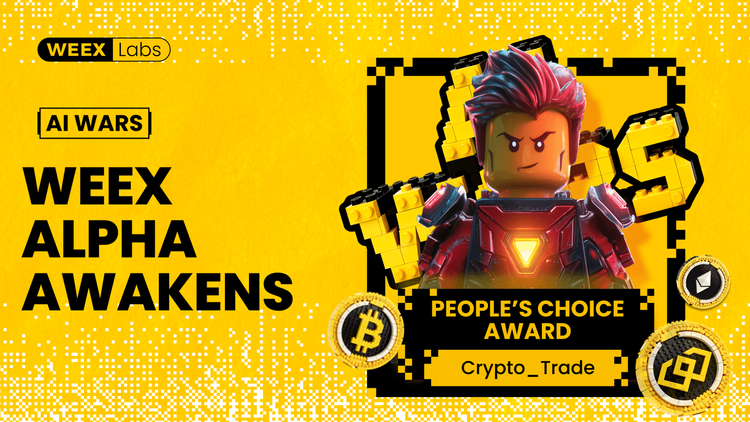
How a Structured AI Crypto Trading Bot Won at the WEEX Hackathon
Crypto_Trade shows how structured inputs and controlled adaptability can build a more stable and reliable AI crypto trading bot within the WEEX AI Trading Hackathon, highlighting a practical path toward scalable AI trading systems.

AI Starts to Devour the Manufacturing Industry | Rewire News Morning Edition
When Bezos starts using AI to buy factories instead of building data centers, it shows that he believes the next wave of AI's value is not inside the box.
When Scaling Meets Speed, Ethereum Foundation Introduces "Hardness" to Safeguard the Base Layer
Hardness is a protocol-level commitment to Ethereum core properties, including censorship resistance, privacy, security, and permissionlessness.
Google, Circle, Stripe Flock Together to Let AI Spend Money: Payment Giants' Joys and Worries in 2026 Q1
The real enemy is no longer each other, but zero cost itself

$100 Billion Factory Purchase: Bezos and Middle Eastern Capital Shift AI Money from Cloud to Shop Floor
Bezos doesn't invest in a new model; he invests in a supply chain.

Xiaomi and MiniMax both unleash their ultimate moves, signaling the start of the Agent Pricing War.
No brand, no marketing, let developers vote with their feet in 8 days
The second half of stablecoins no longer belongs to the crypto circle
What Coinbase doesn't want, Mastercard is eager to buy.
Cursor "Shell" Kimi Controversy Reversed: From Copyright Infringement Allegations to Authorized Collaboration, China's Open Source Model Once Again Becomes a Global AI Foundation
Cursor was accused of being based on Kimi K2.5, which sparked controversy, and was later confirmed to be compliant through Fireworks AI due diligence.
The Real Reason Tokens Don't Sell: 90% of Crypto Projects Overlook Investor Relations
Provide an Investor Relations Best Practices Guide for Crypto Projects.
Is the income of pump.fun real, earning a million dollars a day despite the market downturn?
If it can really earn this much, what is the reason for the low price of $PUMP?
The real reason why tokens are not selling: 90% of crypto projects neglect investor relations
Investor Relations Practice Guide for Cryptocurrency Projects.
Who is the true winner of the "Tokenization" narrative?
Virtually everyone benefits, but the reason for the benefit, the timing, and the underlying logic are completely different.


 App
App