
- Buy Crypto
- Markets
 Futures
- Spot
- Copy Trade
- Earn
- More
Tether Launches USDT on Line’s Kaia Blockchain in Major Asia Expansion
By: thebitjournal|2025/05/08 00:30:02
0
Share
Tether USDT, the world’s leading stablecoin issuer, has announced a significant milestone by deploying its flagship stablecoin, USDT, on the Kaia blockchain. This marks the beginning of a new phase in its collaboration with Line Next, the Web3 arm of Line Corporation, Japan’s popular messaging platform. The integration brings Tether USDT into the mainstream by enabling it to be used within Line’s vast ecosystem of Mini DApps and self-custodial wallets, allowing millions of users to engage with digital assets seamlessly within their daily routines. A New Frontier for Stablecoins in Japan With over 196 million active monthly users, Line is one of the most widely used messaging platforms in Japan. This integration is significant as it brings Tether USDT to a large, mainstream audience that is already familiar with Line’s ecosystem. Tether’s move to introduce Tether USDT on the Kaia blockchain is a crucial step in fostering the adoption of stablecoins and digital assets in Asia and beyond. Line users can now use Tether USDT for various purposes, including in-app payments, cross-border transfers, and decentralized finance (DeFi) activities. By embedding Tether USDT into the everyday experience of Line’s users, Tether offers a simple and familiar way for people to interact with digital currencies. Tether’s Vision for Global Stablecoin Adoption Tether CEO, Paolo Ardoino, expressed his excitement about this new partnership, stating that the integration on the Kaia blockchain is part of the company’s broader strategy to expand stablecoin usage globally. According to Ardoino, this move not only strengthens Tether’s position in the Asian market but also drives stablecoin adoption across different regions. Ardoino stated: “Through LINE NEXT’s blockchain infrastructure, over 200 million LINE users will now have a straightforward way to engage with digital assets in everyday life.” Line Next and Tether USDT Role in the DeFi Ecosystem The Kaia blockchain, which powers Line’s Mini DApp platform, was specifically designed for low-latency transactions and immediate finality, making it an ideal blockchain for stablecoin use. This technical advantage enables fast and reliable transactions, which are essential for users engaging with Tether USDT in various decentralized applications. Sam Seo, chair of the Kaia DLT Foundation, highlighted that the collaboration would enhance the user experience, providing the “fastest, easiest, and most reliable” way to interact with Tether USDT on platforms like Line, decentralized exchanges, and other DeFi applications. Introducing New Features for Line Users The integration introduces several new features for Line users. For example, mission-based USDT rewards will be available within Mini DApps, enabling users to earn stablecoins by participating in various activities. Additionally, peer-to-peer USDT transfers through Line’s in-app wallet will allow users to send and receive stablecoins directly, creating a seamless and efficient payment system. Line Next CEO, Youngsu Ko, emphasized that the USDt integration would make Web3 services more practical and accessible to everyday users. By offering a “dollar-based gateway” for transactions, Line aims to bridge the gap between traditional finance and the emerging world of decentralized applications, opening the door to a broader adoption of blockchain technology. Tether’s Continued Growth and Minting Activities The launch of USDT on the Kaia blockchain comes just days after Tether minted $1 billion Tether USDT on the Tron network, bringing the total supply of USDT on Tron to $71.4 billion. Tether’s expanding presence in the market, including the recent minting activities, demonstrates the company’s continued growth and strong position as the largest stablecoin issuer. Currently, $72.8 billion of Tether USDT are circulating on the Ethereum network, further showcasing the widespread use of Tether’s stablecoin in various blockchain ecosystems. In addition to expanding its stablecoin offering, Tether has also been taking steps to enhance its compliance measures. On May 6, Tether announced a partnership with Chainalysis, a leading blockchain analytics firm. This collaboration aims to integrate Chainalysis’s compliance and monitoring tools into Tether’s tokenization platform, ensuring that USDt transactions adhere to industry regulations and standards. The Future of Stablecoin Adoption and Digital Payments The collaboration between Tether and Line Next marks a significant milestone in the evolution of stablecoin adoption. By making Tether USDT available on a mainstream platform like Line, Tether is contributing to the growing acceptance of digital assets for everyday use. As blockchain technology continues to evolve, Tether’s presence in the digital payments space is expected to expand further, pushing the boundaries of how stablecoins are integrated into daily financial transactions. Conclusion The integration of Tether USDT into Line’s ecosystem represents a pivotal moment in the adoption of stablecoins, particularly in the Asian market. By making digital currencies accessible to millions of everyday users, Tether is taking important steps towards making Web3 services more practical and mainstream. With the potential for future updates and new features, Tether’s collaboration with Line Next is set to pave the way for broader stablecoin adoption in the years to come. Frequently Asked Questions (FAQ) 1- What is USDT? Tether USDT, also known as Tether, is a stablecoin pegged to the value of the US dollar. It is widely used for trading and transactions in the cryptocurrency market. 2- How does the integration with Line work? USDT is integrated into Line’s Mini DApp ecosystem and self-custodial wallet. Line users can now use USDT for in-app payments, cross-border transfers, and DeFi activities directly within the Line app. 3- What makes the Kaia blockchain ideal for USDT? The Kaia blockchain offers low-latency transactions and immediate finality, ensuring that USDT transactions are fast, reliable, and secure. 4- What are the new features available for Line users? Line users can earn USDT rewards in Mini DApps, transfer USDT through the in-app wallet, and access a variety of DeFi applications, all within the Line ecosystem. Appendix: Glossary of Key Terms Kaia Blockchain : The blockchain infrastructure powering Line’s Mini DApp ecosystem, known for low-latency transactions and immediate finality. Line Next: The Web3 arm of Line Corporation, focused on integrating blockchain technology into the Line messaging platform. Mini DApps : Small decentralized applications built on Line’s Kaia blockchain, allowing users to interact with digital assets and services. Self-Custodial Wallet : A digital wallet where users control their private keys, providing full ownership of their cryptocurrency assets. DeFi (Decentralized Finance) : A set of financial services built on blockchain technology that operates without traditional intermediaries like banks. Stablecoin: A type of cryptocurrency designed to maintain a stable value, usually pegged to a fiat currency like the US dollar. References Cointelegraph – cointelegraph.com Crypto News – cryptonews.com For advertising inquiries, please email . [email protected] or Telegram Sign Up For Daily Newsletter I have read and agree to the terms & conditions
You may also like

Particle Founder: The entrepreneurial insights I have gained the most from in the past year
Stop lean startup, stop lightning entrepreneurship, and think carefully about what your product aspirations are.

Huang Renxun's latest podcast transcript: The future of Nvidia, the development of embodied intelligence and agents, the explosion of inference demand, and the public relations crisis of artificial intelligence
The competition in the future is not just about whose model is larger or whose computing power is stronger, but also about who understands the industry better, who can embed AI more deeply into real processes, and who can organize these capabilities into a runnable and scalable system.

OKX Ventures Research Report: AI Agent Economic Infrastructure Research Report (Part 1)
The existing infrastructure is hostile to the Agent economy. Agents can think and act independently at the "capability level," but at the "economic level," they are still locked into infrastructure designed for humans.

The migration of settlement rights: B18 and the institutional starting point of on-chain banks
In the traditional system, banks decide the settlement; in the on-chain system, code begins to take over this responsibility.

From Tencent and Circle: Looking at the Simple and Difficult Questions of Investment
The AI narrative continues to ferment, but the recent performance of related stocks varies, with some in the midst of summer and others as if in winter.

The second half of stablecoins no longer belongs to the crypto circle
What Coinbase doesn't want, Mastercard is eager to buy.

Cursor "Shell" Kimi Controversy Reversed: From Copyright Infringement Allegations to Authorized Collaboration, China's Open Source Model Once Again Becomes a Global AI Foundation
Cursor was accused of being based on Kimi K2.5, which sparked controversy, and was later confirmed to be compliant through Fireworks AI due diligence.

The Real Reason Tokens Don't Sell: 90% of Crypto Projects Overlook Investor Relations
Provide an Investor Relations Best Practices Guide for Crypto Projects.

Is the income of pump.fun real, earning a million dollars a day despite the market downturn?
If it can really earn this much, what is the reason for the low price of $PUMP?

The real reason why tokens are not selling: 90% of crypto projects neglect investor relations
Investor Relations Practice Guide for Cryptocurrency Projects.

Who is the true winner of the "Tokenization" narrative?
Virtually everyone benefits, but the reason for the benefit, the timing, and the underlying logic are completely different.

Moss: The Era of AI-Traded by Anyone | Project Introduction
AI Trading Agent is rapidly growing its infrastructure.

Chip Smuggling Case Exposes Regulatory Loophole | Rewire News Evening Update
AI chips have become a strategic asset more sensitive than missiles

How a Structured AI Crypto Trading Bot Won at the WEEX Hackathon
Ritmex demonstrates how disciplined risk control and structured signals can make an AI crypto trading bot more stable and reliable on WEEX, highlighting the importance of combining execution discipline with scalable AI trading systems.

Old Indicator Fails, Three Major New Signals Emerge: BTC True Bottom May Still Be Below $60K
When the grocery shopping auntie on the subway, or Tony the hairdresser, start asking you about BTC, crypto, and cryptocurrency investments, selling immediately will be the only best option.

Meeting OpenClaw Founder at a Hackathon: What Else Can Lobsters Do?
Imperial College London MetaGame: AI Agent × Web3 Landing Three Major Directions.
Huang Renxun's Latest Podcast Transcript: NVIDIA's Future, Embodied Intelligence and Agent Development, Soaring Demand for Inferencing, and AI's PR Crisis
The future of competition is not only about whose model is bigger, whose computing power is stronger, but also about who understands the industry better, who can more deeply integrate AI into real processes, and who can organize these capabilities into a set of executable, scalable systems
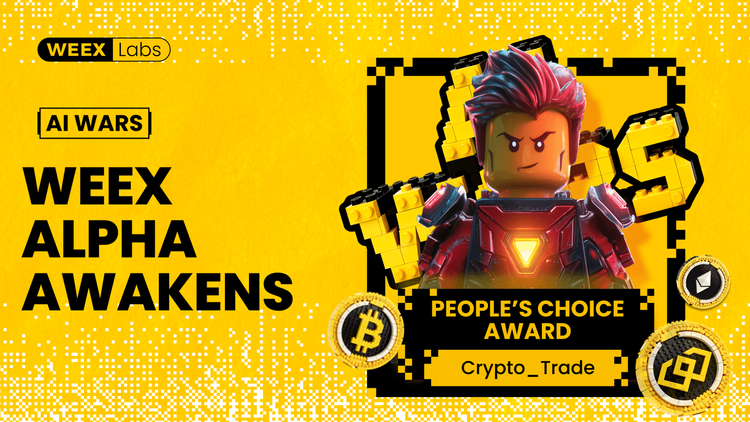
How a Structured AI Crypto Trading Bot Won at the WEEX Hackathon
Crypto_Trade shows how structured inputs and controlled adaptability can build a more stable and reliable AI crypto trading bot within the WEEX AI Trading Hackathon, highlighting a practical path toward scalable AI trading systems.
Particle Founder: The entrepreneurial insights I have gained the most from in the past year
Stop lean startup, stop lightning entrepreneurship, and think carefully about what your product aspirations are.
Huang Renxun's latest podcast transcript: The future of Nvidia, the development of embodied intelligence and agents, the explosion of inference demand, and the public relations crisis of artificial intelligence
The competition in the future is not just about whose model is larger or whose computing power is stronger, but also about who understands the industry better, who can embed AI more deeply into real processes, and who can organize these capabilities into a runnable and scalable system.
OKX Ventures Research Report: AI Agent Economic Infrastructure Research Report (Part 1)
The existing infrastructure is hostile to the Agent economy. Agents can think and act independently at the "capability level," but at the "economic level," they are still locked into infrastructure designed for humans.
The migration of settlement rights: B18 and the institutional starting point of on-chain banks
In the traditional system, banks decide the settlement; in the on-chain system, code begins to take over this responsibility.
From Tencent and Circle: Looking at the Simple and Difficult Questions of Investment
The AI narrative continues to ferment, but the recent performance of related stocks varies, with some in the midst of summer and others as if in winter.
The second half of stablecoins no longer belongs to the crypto circle
What Coinbase doesn't want, Mastercard is eager to buy.


 App
App