
- Buy Crypto
- Markets
 Futures
- Spot
- Copy Trade
 Earn
Earn- More
Under Strong Public Pressure, Vitalik Calls for L2 Support: Come Back and Support ETH

Original Title: Scaling Ethereum L1 and L2s in 2025 and beyond
Original Author: Vitalik Buterin
Original Translation: Fu Ruhe, Odaily Planet Daily
Recently, Ethereum's performance in this round of the cycle has triggered widespread dissatisfaction, with community members expressing disappointment with the Ethereum Foundation's (EF) inaction. Even some leading projects in the Ethereum ecosystem have begun to question the Ethereum Foundation, seemingly with a sense of "forcing the palace."
The founders of several well-known projects have successively voiced their concerns about the future direction of Ethereum:
· The founders of Synthetix and Infinex believe that the EF should require L2 (Layer 2 networks) to use their revenue to buy back ETH, thereby increasing ETH demand and boosting its value.
· The founder of Curve believes that the EF should immediately abandon the L2 strategy.
· The founder of Aave has released the "12 Measures to Save the EF," calling on the foundation to quickly take action to address the current predicament.
· A more intense voice comes from the founder of Wintermute, who believes that Ethereum faces the possibility of a "death spiral."
Facing strong questioning from cornerstone projects in the ecosystem, Ethereum founder Vitalik Buterin finally spoke out today, announcing a "toll" on the L2 network. You can find more details in "The Seven Sins of Ethereum, Who Can Play the 'Salvation Symphony' for It?" and "Leading Projects Jointly 'Force the Palace,' Unmoved by the Ethereum Foundation."
This transformation is likely to become a key milestone in Ethereum's future development, showing us how Ethereum adapts to new opportunities and challenges. Below is Vitalik's original text, curated by Odaily Star Daily.
Ethereum's goal has not changed since day one: to build a global, censorship-resistant, permissionless blockchain platform. It is a freely open platform for decentralized applications, embodying principles similar to GNU + Linux, Mozilla, Tor, Wikipedia, and many other great free and open-source software projects (now known as the rebirth and cypherpunk spirit).
Over the past decade, Ethereum has also developed a feature that I greatly appreciate: in addition to cryptographic and economic innovation, Ethereum is also an innovation in social technology. The Ethereum ecosystem as a whole demonstrates a more open and decentralized way of collaboration. Political philosopher Ahmed Gatnash described his experience at Devcon as follows:
“...this allowed me to catch a glimpse of what an alternative world might look like—a world with almost no barriers, divorced from traditional systems. Here, social hierarchies are upended, and the most esteemed members of society are the geeks who are focused on independently solving problems they deeply care about, rather than those playing the game to climb the ladder of traditional institutions and accumulate power. Here, almost all power is soft power. I found this to be beautiful and very inspiring—it makes you feel that in such a world, anything is possible, and such a world is actually within reach.”
Technical projects and social projects are inherently intertwined. If at time T you have a decentralized technical system, but it is backed by a centralized social process, then you cannot ensure that your technical system will still be decentralized at time T+1. Similarly, social processes are also upheld by technology in various ways: technology attracts users, the ecosystem brought by technology provides incentives for developers to stay, technology grounds the community, focusing on building rather than just socializing, and so on.
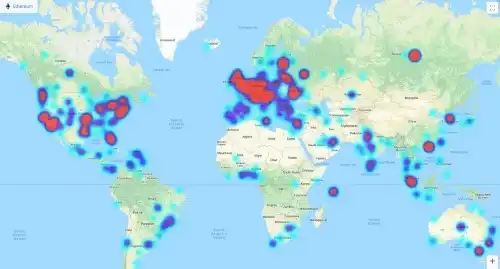
After a decade of effort, under the combined governance of technology and social attributes, Ethereum has demonstrated another important quality: Ethereum is able to provide practical services to people at scale. Millions of people use ETH or stablecoins as a savings method, and more people use these assets for payments: I am one of them. Ethereum has efficient, practical privacy tools that I use to pay for VPN services to protect my internet data. It also has ENS, a robust decentralized alternative for DNS and wider public key infrastructure. Additionally, Ethereum hosts easy-to-use decentralized Twitter alternatives and DeFi tools that offer millions of people higher-yield, lower-risk assets compared to traditional finance.
Five years ago, I was reluctant to discuss the latter's use cases, primarily because the infrastructure and code were not yet mature. At that time, we had just experienced those large-scale and painful smart contract hacks in 2016-2017, and if there was a 5% annual probability of losing 100% of returns, then a 7% annualized return would be meaningless compared to a 5% annualized return. Additionally, transaction fees were too high to enable the widespread application of these tools. Today, these tools have proven their resilience over time, the quality of audit tools has also improved, and we are becoming increasingly confident in their security. We now know what things cannot be done. L2 scaling solutions are at work, and transaction fees have remained extraordinarily low for almost a year.
We need to continue to enhance Ethereum's technological and social properties as well as its usability. If we only have the former without the latter, we will degenerate into an increasingly ineffective "decentralized" community, only protesting against mainstream institutions' "unethical and wrongful behavior" without truly providing better alternative solutions. If we only have the latter without the former, we will be no different from Wall Street's "greed is good" mindset, and many people joined the Ethereum community to break free from this mindset.
The duality of this coexistence of technology and practicality has many far-reaching implications. In this article, I want to focus on a specific aspect that is crucial for Ethereum users in the short and medium term: Ethereum's scaling strategy.
The Rise of Layer 2
Today, the path we are taking to scale Ethereum is through Layer 2 protocols. The Layer 2 in 2025 has made a significant leap compared to the early experiments of 2019: they have achieved crucial decentralization milestones, are safeguarding billions of dollars in assets, and have increased Ethereum's transaction capacity by 17 times while reducing fees by the same magnitude.
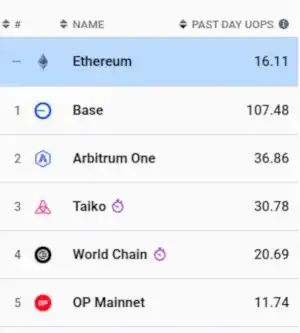
All of this is happening right at the wave of a successful application trend: various DeFi platforms, social networks, prediction markets, and novel projects like Worldchain (which now has 10 million users). Additionally, the once-stalled "enterprise blockchain" movement of the 2010s, deemed a dead end due to private chain failures, has found a new lease on life with the rise of Layer 2, with Soneium being a prominent example.
These successes also demonstrate the social advantage of Ethereum's decentralized and modular scaling approach: the Ethereum Foundation does not need to personally onboard all users but has dozens of independent entities driving the initiative. These entities have also made critical contributions to the technology, and without them, Ethereum could not have achieved what it has today. It is for this reason that we are finally approaching "escape velocity."
Challenge: Scaling and Heterogeneity Handling
The current Layer 2 faces two main challenges:
· Scaling: The current "Blob Space" barely manages to support the existing Layer 2 and its use cases but is far from sufficient to meet future demands.
· Heterogeneity Issue: Ethereum's initial scaling vision was to create a blockchain consisting of multiple shards, with each shard being a replica of the EVM handled by a small set of nodes. In theory, Layer 2 is the realization of this vision. However, in practice, a key difference exists: each shard (or group of shards) is created by different participants, considered as separate chains in the infrastructure, and typically follows different standards. This situation brings about challenges for developers and users in terms of composability and user experience.
The first issue is a straightforward technical challenge with a simple solution but significant implementation difficulty: provide Ethereum with more "Blob Space." Additionally, Ethereum L1 can alleviate the pressure in the short term through moderate scaling and improvements in proof of stake, statelessness, light verification, storage, EVM, and cryptographic technologies.
The second issue is a coordination problem that has garnered widespread public attention. The Ethereum ecosystem is no stranger to cross-team collaboration to accomplish complex technical tasks—after all, we achieved The Merge. However, the coordination challenge here is more daunting due to a larger number of participants, diverse goals, and a later start to the process. Nevertheless, our ecosystem has overcome many difficult challenges in the past and can do so again this time.
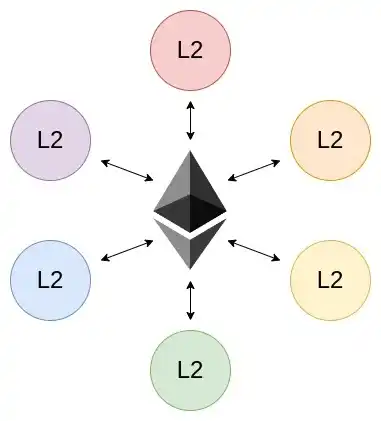
A potential shortcut for scaling is to forgo Layer 2 and achieve a much higher gas limit directly through Layer 1 (whether through multiple shards or a single shard). However, this approach would excessively sacrifice the advantages of Ethereum's current social structure, which have proven highly effective in integrating various forms of research, development, and ecosystem-building cultures. Therefore, we should stick to the existing path, continue primarily scaling through Layer 2, while ensuring Layer 2 truly delivers on its promise.
This implies the following:
· Layer 1 needs to accelerate expanding Blob capacity.
· Layer 1 also needs to moderately scale the EVM and increase the Gas limit to handle activities that Layer 1 will still carry even in a Layer 2-centric environment (such as zero-knowledge proofs, large-scale DeFi, deposits and withdrawals, specific large-scale exit scenarios, key storage wallets, asset issuance, etc.).
· Layer 2 needs to continue to enhance security. Layer 2 should provide the same security guarantees as sharding (including censorship resistance, light client verifiability, absence of embedded trusted parties, etc.).
· Layer 2 and wallets need accelerated improvement and standardized interoperability. This includes chain-specific addresses, message passing and cross-chain bridge standards, efficient cross-chain payments, on-chain configurations, etc. Using Ethereum should feel like using a single ecosystem, not 34 different blockchains.
· Layer 2 deposit/withdrawal times need to be significantly reduced.
· Heterogeneity in Layer 2 is beneficial as long as basic interoperability requirements are met. Some Layer 2s will be based on Rollups with minimal governance, running exact replicas of the Layer 1 EVM; some Layer 2s will try different virtual machines; and some Layer 2s will act more like servers, leveraging Ethereum to provide additional security for users. We need various types of Layer 2 solutions across this spectrum.
· We need to explicitly consider the economics of ETH. Even in a world where Layer 2 dominates, we must ensure that ETH continues to accrue value and provide solutions for various value accrual patterns.
Next, we will delve into each topic in detail.
Scaling: Blob, Blob, or Blob
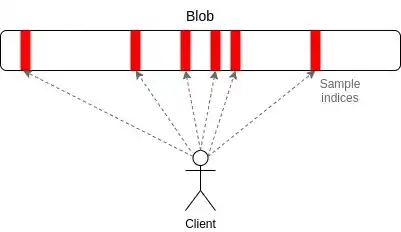
In EIP-4844, each slot has 3 Blobs, with a data bandwidth of 384 kB per slot. A simple calculation suggests this is equivalent to 32 kB per second, with each on-chain transaction taking up approximately 150 bytes, allowing us to support around 210 transactions/second (TPS). According to L2beat's data, this estimate is almost spot on.
The upcoming Pectra release scheduled for March will double the number of Blobs per slot to 6.
The current focus of Fusaka is primarily on PeerDAS, with plans to prioritize the implementation of PeerDAS and EOF only. PeerDAS may increase the Blob count by another 2-3 times.
The next goal is to continue increasing the Blob count. When reaching 2D sampling, the Blob count can be increased to 128 per time slot, with the potential for further increases in the future. Combined with improvements in data compression, the on-chain TPS can reach 100,000.
The above is a restatement of the established roadmap before 2025. The key question is: How do we accelerate this process? My answer is as follows:
· Clearly lower the priority of non-Blob functionalities.
· Emphasize more clearly that Blob is the target and list related peer-to-peer development as a priority for talent recruitment.
· Allow validators to directly adjust the Blob target, similar to Gas limits. This will enable the Blob target to increase more rapidly with technological improvements without waiting for a hard fork.
· Consider more aggressive approaches to increase the Blob count faster by introducing more trust assumptions for low-resource validators, but we need to approach this cautiously.
Enhancing Security: Proof Systems and On-Chain Rollup
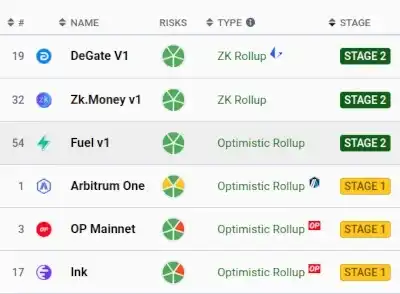
Currently, there are three Stage 1 Rollups (Optimism, Arbitrum, Ink) and three Stage 2 Rollups (DeGate, zk.money, Fuel). However, most activities still occur on Stage 0 Rollup (i.e., multi-signature schemes). This situation needs to change. One significant reason for the slow pace of change is that building a reliable proof system and establishing enough confidence to fully rely on its security (abandoning the "training wheels") is very challenging.
To achieve this goal, there are two paths:
· Stage 2 + Multi-Proof System + Formal Verification: Achieve redundancy through multiple proof systems and enhance security confidence through formal verification (e.g., "Verifiable ZK-EVM project").
· On-Chain Rollup: Integrate the verification of the EVM state transition function into the protocol itself, for example, through precompiled contracts.
At the current stage, both of these paths need to proceed concurrently. The roadmap for "Stage 2 + Multi-Proof System + Formal Verification" is relatively clear. Accelerated development can be achieved through strengthened collaboration within the software stack, reducing duplication of work and improving interoperability as a byproduct.
For Native Rollup, this is still in the early stages and particularly requires more thought on how to maximize the flexibility of precompiled contracts. An ideal goal is to support not just a complete clone of the EVM but also to support an EVM with arbitrary changes, allowing a modified EVM Rollup to still utilize the precompiled contracts of the Native Rollup, only modifying part of it through "introducing custom verifiers." This may involve adaptations of precompiled contracts, opcodes, state trees, and other components.
Interoperability and Standardization
The goal is to make the experience of transferring and applying assets between different L2s as smooth as interacting between different "shards" on the same blockchain. Currently, there is a relatively clear roadmap in this regard:
· Chain-specific addresses: Addresses should include both on-chain account information and an identifier for the chain itself. For example, ERC-3770 is an early attempt, and there are now more complex designs, even migrating the L2 registry to Ethereum L1.
· Standardizing Cross-Layer Bridges and Message Passing: There should be a standardized way to verify proofs and pass messages between L2s, and these standards should not rely on trust-based mechanisms like multi-signature bridges. An ecosystem relying on trust-based assumptions is unacceptable. If this trust assumption did not exist in the 2016 sharding design, it is also unacceptable today.
· Accelerating Deposit and Withdrawal Times: The time for "local" messages should be reduced from weeks to minutes (with the ultimate goal being one block time). This requires faster ZK-EVM provers and support for proof aggregation technology.
· Reading L1 Data from L2: For example, L1SLOAD and REMOTESTATICCALL, these features will significantly simplify cross-L2 interoperability and help enable functionalities like key management wallets.
· Shared ordering and other long-term work: One valuable aspect of Rollup-based designs is their ability to more efficiently implement shared ordering and similar functionalities.
While meeting these standards, L2s can differ in terms of security, performance, and design models according to their needs. For example, exploring different virtual machines, ordering models, and trade-offs between scale and security are valid. However, the security level of each L2 must be clear to users and developers.
To accelerate progress, cross-industry organizations within the ecosystem can take on a larger share of the work, such as the Ethereum Foundation, client development teams, and mainstream application development teams. This will reduce coordination costs, making the adoption of standards an easier decision as the development workload for each L2 and wallet will decrease. However, as an extension of the Ethereum ecosystem, L2s and wallets also need to enhance the development work at the "last mile" to ensure these features truly reach the hands of users.
Ethereum Economics
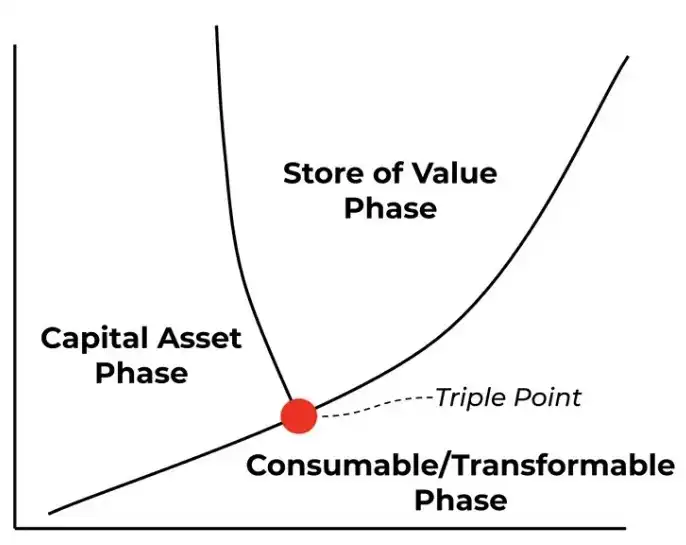
We should adopt a multi-faceted strategy to cover all major potential sources of value for ETH as a triple-point asset. Key components of this strategy may include:
· Achieving widespread consensus, solidifying ETH as a primary asset of the larger (L1 + L2) Ethereum economy, supporting applications relying on ETH as the primary collateral, and more.
· Encouraging L2 support for ETH and allocating a portion of fees. This could be achieved through burning a portion of fees, permanently staking fees and donating proceeds to public goods within the Ethereum ecosystem, or through various other means.
· Supporting Rollup-based designs, partly as a pathway for L1 to capture value from MEV, but not mandating that all Rollups follow this design, as it may not be suitable for all applications, and it cannot be assumed that this alone will solve all issues.
· Increasing the Blob count, considering setting a minimum Blob price, and using Blob as another potential revenue stream. For example, suppose the average fee for Blob over the past 30 days remains constant (driven by demand) while the Blob count increases to 128. In that case, Ethereum would burn 713,000 ETH per year. However, the demand curve may not always be favorable, so this alone cannot solve the problem.
Conclusion: The Road Ahead
Ethereum has matured in terms of its technical stack and social ecosystem, leading us toward a freer and more open future where billions will benefit from crypto assets and decentralized applications. However, there is still much work to be done, and now is the time to redouble our efforts.
· If you are an L2 developer, engage in tooling to securely scale Blob, develop code to expand the EVM's execution, and implement features and standards that enable L2 interoperability.
· If you are a wallet developer, similarly contribute to and implement standards that keep the ecosystem secure while ensuring a seamless user experience that upholds the same security and decentralization ethos as Ethereum L1.
· If you are an ETH holder or community member, actively engage in these discussions; there are many areas that require deep thought and collaboration. The future of Ethereum relies on the active participation of each and every one of us.
You may also like

Token Cannot Compound, Where Is the Real Investment Opportunity?

February 6th Market Key Intelligence, How Much Did You Miss?

China's Central Bank and Eight Other Departments' Latest Regulatory Focus: Key Attention to RWA Tokenized Asset Risk
Foreword: Today, the People's Bank of China's website published the "Notice of the People's Bank of China, National Development and Reform Commission, Ministry of Industry and Information Technology, Ministry of Public Security, State Administration for Market Regulation, China Banking and Insurance Regulatory Commission, China Securities Regulatory Commission, State Administration of Foreign Exchange on Further Preventing and Dealing with Risks Related to Virtual Currency and Others (Yinfa [2026] No. 42)", the latest regulatory requirements from the eight departments including the central bank, which are basically consistent with the regulatory requirements of recent years. The main focus of the regulation is on speculative activities such as virtual currency trading, exchanges, ICOs, overseas platform services, and this time, regulatory oversight of RWA has been added, explicitly prohibiting RWA tokenization, stablecoins (especially those pegged to the RMB). The following is the full text:
To the people's governments of all provinces, autonomous regions, and municipalities directly under the Central Government, the Xinjiang Production and Construction Corps:
Recently, there have been speculative activities related to virtual currency and Real-World Assets (RWA) tokenization, disrupting the economic and financial order and jeopardizing the property security of the people. In order to further prevent and address the risks related to virtual currency and Real-World Assets tokenization, effectively safeguard national security and social stability, in accordance with the "Law of the People's Republic of China on the People's Bank of China," "Law of the People's Republic of China on Commercial Banks," "Securities Law of the People's Republic of China," "Law of the People's Republic of China on Securities Investment Funds," "Law of the People's Republic of China on Futures and Derivatives," "Cybersecurity Law of the People's Republic of China," "Regulations of the People's Republic of China on the Administration of Renminbi," "Regulations on Prevention and Disposal of Illegal Fundraising," "Regulations of the People's Republic of China on Foreign Exchange Administration," "Telecommunications Regulations of the People's Republic of China," and other provisions, after reaching consensus with the Cyberspace Administration of China, the Supreme People's Court, and the Supreme People's Procuratorate, and with the approval of the State Council, the relevant matters are notified as follows:
(I) Virtual currency does not possess the legal status equivalent to fiat currency. Virtual currencies such as Bitcoin, Ether, Tether, etc., have the main characteristics of being issued by non-monetary authorities, using encryption technology and distributed ledger or similar technology, existing in digital form, etc. They do not have legal tender status, should not and cannot be circulated and used as currency in the market.
The business activities related to virtual currency are classified as illegal financial activities. The exchange of fiat currency and virtual currency within the territory, exchange of virtual currencies, acting as a central counterparty in buying and selling virtual currencies, providing information intermediary and pricing services for virtual currency transactions, token issuance financing, and trading of virtual currency-related financial products, etc., fall under illegal financial activities, such as suspected illegal issuance of token vouchers, unauthorized public issuance of securities, illegal operation of securities and futures business, illegal fundraising, etc., are strictly prohibited across the board and resolutely banned in accordance with the law. Overseas entities and individuals are not allowed to provide virtual currency-related services to domestic entities in any form.
A stablecoin pegged to a fiat currency indirectly fulfills some functions of the fiat currency in circulation. Without the consent of relevant authorities in accordance with the law and regulations, any domestic or foreign entity or individual is not allowed to issue a RMB-pegged stablecoin overseas.
(II)Tokenization of Real-World Assets refers to the use of encryption technology and distributed ledger or similar technologies to transform ownership rights, income rights, etc., of assets into tokens (tokens) or other interests or bond certificates with token (token) characteristics, and carry out issuance and trading activities.
Engaging in the tokenization of real-world assets domestically, as well as providing related intermediary, information technology services, etc., which are suspected of illegal issuance of token vouchers, unauthorized public offering of securities, illegal operation of securities and futures business, illegal fundraising, and other illegal financial activities, shall be prohibited; except for relevant business activities carried out with the approval of the competent authorities in accordance with the law and regulations and relying on specific financial infrastructures. Overseas entities and individuals are not allowed to illegally provide services related to the tokenization of real-world assets to domestic entities in any form.
(III) Inter-agency Coordination. The People's Bank of China, together with the National Development and Reform Commission, the Ministry of Industry and Information Technology, the Ministry of Public Security, the State Administration for Market Regulation, the China Banking and Insurance Regulatory Commission, the China Securities Regulatory Commission, the State Administration of Foreign Exchange, and other departments, will improve the work mechanism, strengthen coordination with the Cyberspace Administration of China, the Supreme People's Court, and the Supreme People's Procuratorate, coordinate efforts, and overall guide regions to carry out risk prevention and disposal of virtual currency-related illegal financial activities.
The China Securities Regulatory Commission, together with the National Development and Reform Commission, the Ministry of Industry and Information Technology, the Ministry of Public Security, the People's Bank of China, the State Administration for Market Regulation, the China Banking and Insurance Regulatory Commission, the State Administration of Foreign Exchange, and other departments, will improve the work mechanism, strengthen coordination with the Cyberspace Administration of China, the Supreme People's Court, and the Supreme People's Procuratorate, coordinate efforts, and overall guide regions to carry out risk prevention and disposal of illegal financial activities related to the tokenization of real-world assets.
(IV) Strengthening Local Implementation. The people's governments at the provincial level are overall responsible for the prevention and disposal of risks related to virtual currencies and the tokenization of real-world assets in their respective administrative regions. The specific leading department is the local financial regulatory department, with participation from branches and dispatched institutions of the State Council's financial regulatory department, telecommunications regulators, public security, market supervision, and other departments, in coordination with cyberspace departments, courts, and procuratorates, to improve the normalization of the work mechanism, effectively connect with the relevant work mechanisms of central departments, form a cooperative and coordinated working pattern between central and local governments, effectively prevent and properly handle risks related to virtual currencies and the tokenization of real-world assets, and maintain economic and financial order and social stability.
(5) Enhanced Risk Monitoring. The People's Bank of China, China Securities Regulatory Commission, National Development and Reform Commission, Ministry of Industry and Information Technology, Ministry of Public Security, State Administration of Foreign Exchange, Cyberspace Administration of China, and other departments continue to improve monitoring techniques and system support, enhance cross-departmental data analysis and sharing, establish sound information sharing and cross-validation mechanisms, promptly grasp the risk situation of activities related to virtual currency and real-world asset tokenization. Local governments at all levels give full play to the role of local monitoring and early warning mechanisms. Local financial regulatory authorities, together with branches and agencies of the State Council's financial regulatory authorities, as well as departments of cyberspace and public security, ensure effective connection between online monitoring, offline investigation, and fund tracking, efficiently and accurately identify activities related to virtual currency and real-world asset tokenization, promptly share risk information, improve early warning information dissemination, verification, and rapid response mechanisms.
(6) Strengthened Oversight of Financial Institutions, Intermediaries, and Technology Service Providers. Financial institutions (including non-bank payment institutions) are prohibited from providing account opening, fund transfer, and clearing services for virtual currency-related business activities, issuing and selling financial products related to virtual currency, including virtual currency and related financial products in the scope of collateral, conducting insurance business related to virtual currency, or including virtual currency in the scope of insurance liability. Financial institutions (including non-bank payment institutions) are prohibited from providing custody, clearing, and settlement services for unauthorized real-world asset tokenization-related business and related financial products. Relevant intermediary institutions and information technology service providers are prohibited from providing intermediary, technical, or other services for unauthorized real-world asset tokenization-related businesses and related financial products.
(7) Enhanced Management of Internet Information Content and Access. Internet enterprises are prohibited from providing online business venues, commercial displays, marketing, advertising, or paid traffic diversion services for virtual currency and real-world asset tokenization-related business activities. Upon discovering clues of illegal activities, they should promptly report to relevant departments and provide technical support and assistance for related investigations and inquiries. Based on the clues transferred by the financial regulatory authorities, the cyberspace administration, telecommunications authorities, and public security departments should promptly close and deal with websites, mobile applications (including mini-programs), and public accounts engaged in virtual currency and real-world asset tokenization-related business activities in accordance with the law.
(8) Strengthened Entity Registration and Advertisement Management. Market supervision departments strengthen entity registration and management, and enterprise and individual business registrations must not contain terms such as "virtual currency," "virtual asset," "cryptocurrency," "crypto asset," "stablecoin," "real-world asset tokenization," or "RWA" in their names or business scopes. Market supervision departments, together with financial regulatory authorities, legally enhance the supervision of advertisements related to virtual currency and real-world asset tokenization, promptly investigating and handling relevant illegal advertisements.
(IX) Continued Rectification of Virtual Currency Mining Activities. The National Development and Reform Commission, together with relevant departments, strictly controls virtual currency mining activities, continuously promotes the rectification of virtual currency mining activities. The people's governments of various provinces take overall responsibility for the rectification of "mining" within their respective administrative regions. In accordance with the requirements of the National Development and Reform Commission and other departments in the "Notice on the Rectification of Virtual Currency Mining Activities" (NDRC Energy-saving Building [2021] No. 1283) and the provisions of the "Guidance Catalog for Industrial Structure Adjustment (2024 Edition)," a comprehensive review, investigation, and closure of existing virtual currency mining projects are conducted, new mining projects are strictly prohibited, and mining machine production enterprises are strictly prohibited from providing mining machine sales and other services within the country.
(X) Severe Crackdown on Related Illegal Financial Activities. Upon discovering clues to illegal financial activities related to virtual currency and the tokenization of real-world assets, local financial regulatory authorities, branches of the State Council's financial regulatory authorities, and other relevant departments promptly investigate, determine, and properly handle the issues in accordance with the law, and seriously hold the relevant entities and individuals legally responsible. Those suspected of crimes are transferred to the judicial authorities for processing according to the law.
(XI) Severe Crackdown on Related Illegal and Criminal Activities. The Ministry of Public Security, the People's Bank of China, the State Administration for Market Regulation, the China Banking and Insurance Regulatory Commission, the China Securities Regulatory Commission, as well as judicial and procuratorial organs, in accordance with their respective responsibilities, rigorously crack down on illegal and criminal activities related to virtual currency, the tokenization of real-world assets, such as fraud, money laundering, illegal business operations, pyramid schemes, illegal fundraising, and other illegal and criminal activities carried out under the guise of virtual currency, the tokenization of real-world assets, etc.
(XII) Strengthen Industry Self-discipline. Relevant industry associations should enhance membership management and policy advocacy, based on their own responsibilities, advocate and urge member units to resist illegal financial activities related to virtual currency and the tokenization of real-world assets. Member units that violate regulatory policies and industry self-discipline rules are to be disciplined in accordance with relevant self-regulatory management regulations. By leveraging various industry infrastructure, conduct risk monitoring related to virtual currency, the tokenization of real-world assets, and promptly transfer issue clues to relevant departments.
(XIII) Without the approval of relevant departments in accordance with the law and regulations, domestic entities and foreign entities controlled by them may not issue virtual currency overseas.
(XIV) Domestic entities engaging directly or indirectly in overseas external debt-based tokenization of real-world assets, or conducting asset securitization activities abroad based on domestic ownership rights, income rights, etc. (hereinafter referred to as domestic equity), should be strictly regulated in accordance with the principles of "same business, same risk, same rules." The National Development and Reform Commission, the China Securities Regulatory Commission, the State Administration of Foreign Exchange, and other relevant departments regulate it according to their respective responsibilities. For other forms of overseas real-world asset tokenization activities based on domestic equity by domestic entities, the China Securities Regulatory Commission, together with relevant departments, supervise according to their division of responsibilities. Without the consent and filing of relevant departments, no unit or individual may engage in the above-mentioned business.
(15) Overseas subsidiaries and branches of domestic financial institutions providing Real World Asset Tokenization-related services overseas shall do so legally and prudently. They shall have professional personnel and systems in place to effectively mitigate business risks, strictly implement customer onboarding, suitability management, anti-money laundering requirements, and incorporate them into the domestic financial institutions' compliance and risk management system. Intermediaries and information technology service providers offering Real World Asset Tokenization services abroad based on domestic equity or conducting Real World Asset Tokenization business in the form of overseas debt for domestic entities directly or indirectly venturing abroad must strictly comply with relevant laws and regulations. They should establish and improve relevant compliance and internal control systems in accordance with relevant normative requirements, strengthen business and risk control, and report the business developments to the relevant regulatory authorities for approval or filing.
(16) Strengthen organizational leadership and overall coordination. All departments and regions should attach great importance to the prevention of risks related to virtual currencies and Real World Asset Tokenization, strengthen organizational leadership, clarify work responsibilities, form a long-term effective working mechanism with centralized coordination, local implementation, and shared responsibilities, maintain high pressure, dynamically monitor risks, effectively prevent and mitigate risks in an orderly and efficient manner, legally protect the property security of the people, and make every effort to maintain economic and financial order and social stability.
(17) Widely carry out publicity and education. All departments, regions, and industry associations should make full use of various media and other communication channels to disseminate information through legal and policy interpretation, analysis of typical cases, and education on investment risks, etc. They should promote the illegality and harm of virtual currencies and Real World Asset Tokenization-related businesses and their manifestations, fully alert to potential risks and hidden dangers, and enhance public awareness and identification capabilities for risk prevention.
(18) Engaging in illegal financial activities related to virtual currencies and Real World Asset Tokenization in violation of this notice, as well as providing services for virtual currencies and Real World Asset Tokenization-related businesses, shall be punished in accordance with relevant regulations. If it constitutes a crime, criminal liability shall be pursued according to the law. For domestic entities and individuals who knowingly or should have known that overseas entities illegally provided virtual currency or Real World Asset Tokenization-related services to domestic entities and still assisted them, relevant responsibilities shall be pursued according to the law. If it constitutes a crime, criminal liability shall be pursued according to the law.
(19) If any unit or individual invests in virtual currencies, Real World Asset Tokens, and related financial products against public order and good customs, the relevant civil legal actions shall be invalid, and any resulting losses shall be borne by them. If there are suspicions of disrupting financial order and jeopardizing financial security, the relevant departments shall deal with them according to the law.
This notice shall enter into force upon the date of its issuance. The People's Bank of China and ten other departments' "Notice on Further Preventing and Dealing with the Risks of Virtual Currency Trading Speculation" (Yinfa [2021] No. 237) is hereby repealed.

Former Partner's Perspective on Multicoin: Kyle's Exit, But the Game He Left Behind Just Getting Started
Why Bitcoin Is Falling Now: The Real Reasons Behind BTC's Crash & WEEX's Smart Profit Playbook
Bitcoin's ongoing crash explained: Discover the 5 hidden triggers behind BTC's plunge & how WEEX's Auto Earn and Trade to Earn strategies help traders profit from crypto market volatility.

Wall Street's Hottest Trades See Exodus

Vitalik Discusses Ethereum Scaling Path, Circle Announces Partnership with Polymarket, What's the Overseas Crypto Community Talking About Today?

Believing in the Capital Markets - The Essence and Core Value of Cryptocurrency

Polymarket's 'Weatherman': Predict Temperature, Win Million-Dollar Payout

$15K+ Profits: The 4 AI Trading Secrets WEEX Hackathon Prelim Winners Used to Dominate Volatile Crypto Markets
How WEEX Hackathon's top AI trading strategies made $15K+ in crypto markets: 4 proven rules for ETH/BTC trading, market structure analysis, and risk management in volatile conditions.

A nearly 20% one-day plunge, how long has it been since you last saw a $60,000 Bitcoin?

Raoul Pal: I've seen every single panic, and they are never the end.

Key Market Information Discrepancy on February 6th - A Must-Read! | Alpha Morning Report

2026 Crypto Industry's First Snowfall
The Harsh Reality Behind the $26 Billion Crypto Liquidation: Liquidity Is Killing the Market
Why Is Gold, US Stocks, Bitcoin All Falling?

Key Market Intelligence for February 5th, how much did you miss out on?

Wintermute: By 2026, crypto had gradually become the settlement layer of the Internet economy
Token Cannot Compound, Where Is the Real Investment Opportunity?
February 6th Market Key Intelligence, How Much Did You Miss?
China's Central Bank and Eight Other Departments' Latest Regulatory Focus: Key Attention to RWA Tokenized Asset Risk
Foreword: Today, the People's Bank of China's website published the "Notice of the People's Bank of China, National Development and Reform Commission, Ministry of Industry and Information Technology, Ministry of Public Security, State Administration for Market Regulation, China Banking and Insurance Regulatory Commission, China Securities Regulatory Commission, State Administration of Foreign Exchange on Further Preventing and Dealing with Risks Related to Virtual Currency and Others (Yinfa [2026] No. 42)", the latest regulatory requirements from the eight departments including the central bank, which are basically consistent with the regulatory requirements of recent years. The main focus of the regulation is on speculative activities such as virtual currency trading, exchanges, ICOs, overseas platform services, and this time, regulatory oversight of RWA has been added, explicitly prohibiting RWA tokenization, stablecoins (especially those pegged to the RMB). The following is the full text:
To the people's governments of all provinces, autonomous regions, and municipalities directly under the Central Government, the Xinjiang Production and Construction Corps:
Recently, there have been speculative activities related to virtual currency and Real-World Assets (RWA) tokenization, disrupting the economic and financial order and jeopardizing the property security of the people. In order to further prevent and address the risks related to virtual currency and Real-World Assets tokenization, effectively safeguard national security and social stability, in accordance with the "Law of the People's Republic of China on the People's Bank of China," "Law of the People's Republic of China on Commercial Banks," "Securities Law of the People's Republic of China," "Law of the People's Republic of China on Securities Investment Funds," "Law of the People's Republic of China on Futures and Derivatives," "Cybersecurity Law of the People's Republic of China," "Regulations of the People's Republic of China on the Administration of Renminbi," "Regulations on Prevention and Disposal of Illegal Fundraising," "Regulations of the People's Republic of China on Foreign Exchange Administration," "Telecommunications Regulations of the People's Republic of China," and other provisions, after reaching consensus with the Cyberspace Administration of China, the Supreme People's Court, and the Supreme People's Procuratorate, and with the approval of the State Council, the relevant matters are notified as follows:
(I) Virtual currency does not possess the legal status equivalent to fiat currency. Virtual currencies such as Bitcoin, Ether, Tether, etc., have the main characteristics of being issued by non-monetary authorities, using encryption technology and distributed ledger or similar technology, existing in digital form, etc. They do not have legal tender status, should not and cannot be circulated and used as currency in the market.
The business activities related to virtual currency are classified as illegal financial activities. The exchange of fiat currency and virtual currency within the territory, exchange of virtual currencies, acting as a central counterparty in buying and selling virtual currencies, providing information intermediary and pricing services for virtual currency transactions, token issuance financing, and trading of virtual currency-related financial products, etc., fall under illegal financial activities, such as suspected illegal issuance of token vouchers, unauthorized public issuance of securities, illegal operation of securities and futures business, illegal fundraising, etc., are strictly prohibited across the board and resolutely banned in accordance with the law. Overseas entities and individuals are not allowed to provide virtual currency-related services to domestic entities in any form.
A stablecoin pegged to a fiat currency indirectly fulfills some functions of the fiat currency in circulation. Without the consent of relevant authorities in accordance with the law and regulations, any domestic or foreign entity or individual is not allowed to issue a RMB-pegged stablecoin overseas.
(II)Tokenization of Real-World Assets refers to the use of encryption technology and distributed ledger or similar technologies to transform ownership rights, income rights, etc., of assets into tokens (tokens) or other interests or bond certificates with token (token) characteristics, and carry out issuance and trading activities.
Engaging in the tokenization of real-world assets domestically, as well as providing related intermediary, information technology services, etc., which are suspected of illegal issuance of token vouchers, unauthorized public offering of securities, illegal operation of securities and futures business, illegal fundraising, and other illegal financial activities, shall be prohibited; except for relevant business activities carried out with the approval of the competent authorities in accordance with the law and regulations and relying on specific financial infrastructures. Overseas entities and individuals are not allowed to illegally provide services related to the tokenization of real-world assets to domestic entities in any form.
(III) Inter-agency Coordination. The People's Bank of China, together with the National Development and Reform Commission, the Ministry of Industry and Information Technology, the Ministry of Public Security, the State Administration for Market Regulation, the China Banking and Insurance Regulatory Commission, the China Securities Regulatory Commission, the State Administration of Foreign Exchange, and other departments, will improve the work mechanism, strengthen coordination with the Cyberspace Administration of China, the Supreme People's Court, and the Supreme People's Procuratorate, coordinate efforts, and overall guide regions to carry out risk prevention and disposal of virtual currency-related illegal financial activities.
The China Securities Regulatory Commission, together with the National Development and Reform Commission, the Ministry of Industry and Information Technology, the Ministry of Public Security, the People's Bank of China, the State Administration for Market Regulation, the China Banking and Insurance Regulatory Commission, the State Administration of Foreign Exchange, and other departments, will improve the work mechanism, strengthen coordination with the Cyberspace Administration of China, the Supreme People's Court, and the Supreme People's Procuratorate, coordinate efforts, and overall guide regions to carry out risk prevention and disposal of illegal financial activities related to the tokenization of real-world assets.
(IV) Strengthening Local Implementation. The people's governments at the provincial level are overall responsible for the prevention and disposal of risks related to virtual currencies and the tokenization of real-world assets in their respective administrative regions. The specific leading department is the local financial regulatory department, with participation from branches and dispatched institutions of the State Council's financial regulatory department, telecommunications regulators, public security, market supervision, and other departments, in coordination with cyberspace departments, courts, and procuratorates, to improve the normalization of the work mechanism, effectively connect with the relevant work mechanisms of central departments, form a cooperative and coordinated working pattern between central and local governments, effectively prevent and properly handle risks related to virtual currencies and the tokenization of real-world assets, and maintain economic and financial order and social stability.
(5) Enhanced Risk Monitoring. The People's Bank of China, China Securities Regulatory Commission, National Development and Reform Commission, Ministry of Industry and Information Technology, Ministry of Public Security, State Administration of Foreign Exchange, Cyberspace Administration of China, and other departments continue to improve monitoring techniques and system support, enhance cross-departmental data analysis and sharing, establish sound information sharing and cross-validation mechanisms, promptly grasp the risk situation of activities related to virtual currency and real-world asset tokenization. Local governments at all levels give full play to the role of local monitoring and early warning mechanisms. Local financial regulatory authorities, together with branches and agencies of the State Council's financial regulatory authorities, as well as departments of cyberspace and public security, ensure effective connection between online monitoring, offline investigation, and fund tracking, efficiently and accurately identify activities related to virtual currency and real-world asset tokenization, promptly share risk information, improve early warning information dissemination, verification, and rapid response mechanisms.
(6) Strengthened Oversight of Financial Institutions, Intermediaries, and Technology Service Providers. Financial institutions (including non-bank payment institutions) are prohibited from providing account opening, fund transfer, and clearing services for virtual currency-related business activities, issuing and selling financial products related to virtual currency, including virtual currency and related financial products in the scope of collateral, conducting insurance business related to virtual currency, or including virtual currency in the scope of insurance liability. Financial institutions (including non-bank payment institutions) are prohibited from providing custody, clearing, and settlement services for unauthorized real-world asset tokenization-related business and related financial products. Relevant intermediary institutions and information technology service providers are prohibited from providing intermediary, technical, or other services for unauthorized real-world asset tokenization-related businesses and related financial products.
(7) Enhanced Management of Internet Information Content and Access. Internet enterprises are prohibited from providing online business venues, commercial displays, marketing, advertising, or paid traffic diversion services for virtual currency and real-world asset tokenization-related business activities. Upon discovering clues of illegal activities, they should promptly report to relevant departments and provide technical support and assistance for related investigations and inquiries. Based on the clues transferred by the financial regulatory authorities, the cyberspace administration, telecommunications authorities, and public security departments should promptly close and deal with websites, mobile applications (including mini-programs), and public accounts engaged in virtual currency and real-world asset tokenization-related business activities in accordance with the law.
(8) Strengthened Entity Registration and Advertisement Management. Market supervision departments strengthen entity registration and management, and enterprise and individual business registrations must not contain terms such as "virtual currency," "virtual asset," "cryptocurrency," "crypto asset," "stablecoin," "real-world asset tokenization," or "RWA" in their names or business scopes. Market supervision departments, together with financial regulatory authorities, legally enhance the supervision of advertisements related to virtual currency and real-world asset tokenization, promptly investigating and handling relevant illegal advertisements.
(IX) Continued Rectification of Virtual Currency Mining Activities. The National Development and Reform Commission, together with relevant departments, strictly controls virtual currency mining activities, continuously promotes the rectification of virtual currency mining activities. The people's governments of various provinces take overall responsibility for the rectification of "mining" within their respective administrative regions. In accordance with the requirements of the National Development and Reform Commission and other departments in the "Notice on the Rectification of Virtual Currency Mining Activities" (NDRC Energy-saving Building [2021] No. 1283) and the provisions of the "Guidance Catalog for Industrial Structure Adjustment (2024 Edition)," a comprehensive review, investigation, and closure of existing virtual currency mining projects are conducted, new mining projects are strictly prohibited, and mining machine production enterprises are strictly prohibited from providing mining machine sales and other services within the country.
(X) Severe Crackdown on Related Illegal Financial Activities. Upon discovering clues to illegal financial activities related to virtual currency and the tokenization of real-world assets, local financial regulatory authorities, branches of the State Council's financial regulatory authorities, and other relevant departments promptly investigate, determine, and properly handle the issues in accordance with the law, and seriously hold the relevant entities and individuals legally responsible. Those suspected of crimes are transferred to the judicial authorities for processing according to the law.
(XI) Severe Crackdown on Related Illegal and Criminal Activities. The Ministry of Public Security, the People's Bank of China, the State Administration for Market Regulation, the China Banking and Insurance Regulatory Commission, the China Securities Regulatory Commission, as well as judicial and procuratorial organs, in accordance with their respective responsibilities, rigorously crack down on illegal and criminal activities related to virtual currency, the tokenization of real-world assets, such as fraud, money laundering, illegal business operations, pyramid schemes, illegal fundraising, and other illegal and criminal activities carried out under the guise of virtual currency, the tokenization of real-world assets, etc.
(XII) Strengthen Industry Self-discipline. Relevant industry associations should enhance membership management and policy advocacy, based on their own responsibilities, advocate and urge member units to resist illegal financial activities related to virtual currency and the tokenization of real-world assets. Member units that violate regulatory policies and industry self-discipline rules are to be disciplined in accordance with relevant self-regulatory management regulations. By leveraging various industry infrastructure, conduct risk monitoring related to virtual currency, the tokenization of real-world assets, and promptly transfer issue clues to relevant departments.
(XIII) Without the approval of relevant departments in accordance with the law and regulations, domestic entities and foreign entities controlled by them may not issue virtual currency overseas.
(XIV) Domestic entities engaging directly or indirectly in overseas external debt-based tokenization of real-world assets, or conducting asset securitization activities abroad based on domestic ownership rights, income rights, etc. (hereinafter referred to as domestic equity), should be strictly regulated in accordance with the principles of "same business, same risk, same rules." The National Development and Reform Commission, the China Securities Regulatory Commission, the State Administration of Foreign Exchange, and other relevant departments regulate it according to their respective responsibilities. For other forms of overseas real-world asset tokenization activities based on domestic equity by domestic entities, the China Securities Regulatory Commission, together with relevant departments, supervise according to their division of responsibilities. Without the consent and filing of relevant departments, no unit or individual may engage in the above-mentioned business.
(15) Overseas subsidiaries and branches of domestic financial institutions providing Real World Asset Tokenization-related services overseas shall do so legally and prudently. They shall have professional personnel and systems in place to effectively mitigate business risks, strictly implement customer onboarding, suitability management, anti-money laundering requirements, and incorporate them into the domestic financial institutions' compliance and risk management system. Intermediaries and information technology service providers offering Real World Asset Tokenization services abroad based on domestic equity or conducting Real World Asset Tokenization business in the form of overseas debt for domestic entities directly or indirectly venturing abroad must strictly comply with relevant laws and regulations. They should establish and improve relevant compliance and internal control systems in accordance with relevant normative requirements, strengthen business and risk control, and report the business developments to the relevant regulatory authorities for approval or filing.
(16) Strengthen organizational leadership and overall coordination. All departments and regions should attach great importance to the prevention of risks related to virtual currencies and Real World Asset Tokenization, strengthen organizational leadership, clarify work responsibilities, form a long-term effective working mechanism with centralized coordination, local implementation, and shared responsibilities, maintain high pressure, dynamically monitor risks, effectively prevent and mitigate risks in an orderly and efficient manner, legally protect the property security of the people, and make every effort to maintain economic and financial order and social stability.
(17) Widely carry out publicity and education. All departments, regions, and industry associations should make full use of various media and other communication channels to disseminate information through legal and policy interpretation, analysis of typical cases, and education on investment risks, etc. They should promote the illegality and harm of virtual currencies and Real World Asset Tokenization-related businesses and their manifestations, fully alert to potential risks and hidden dangers, and enhance public awareness and identification capabilities for risk prevention.
(18) Engaging in illegal financial activities related to virtual currencies and Real World Asset Tokenization in violation of this notice, as well as providing services for virtual currencies and Real World Asset Tokenization-related businesses, shall be punished in accordance with relevant regulations. If it constitutes a crime, criminal liability shall be pursued according to the law. For domestic entities and individuals who knowingly or should have known that overseas entities illegally provided virtual currency or Real World Asset Tokenization-related services to domestic entities and still assisted them, relevant responsibilities shall be pursued according to the law. If it constitutes a crime, criminal liability shall be pursued according to the law.
(19) If any unit or individual invests in virtual currencies, Real World Asset Tokens, and related financial products against public order and good customs, the relevant civil legal actions shall be invalid, and any resulting losses shall be borne by them. If there are suspicions of disrupting financial order and jeopardizing financial security, the relevant departments shall deal with them according to the law.
This notice shall enter into force upon the date of its issuance. The People's Bank of China and ten other departments' "Notice on Further Preventing and Dealing with the Risks of Virtual Currency Trading Speculation" (Yinfa [2021] No. 237) is hereby repealed.
Former Partner's Perspective on Multicoin: Kyle's Exit, But the Game He Left Behind Just Getting Started
Why Bitcoin Is Falling Now: The Real Reasons Behind BTC's Crash & WEEX's Smart Profit Playbook
Bitcoin's ongoing crash explained: Discover the 5 hidden triggers behind BTC's plunge & how WEEX's Auto Earn and Trade to Earn strategies help traders profit from crypto market volatility.


 App
App