
- Buy Crypto
- Markets
 Futures
- Spot
- Copy Trade
- Earn
- More
How Prediction Markets Raise Insider Trading and Credit Risks

Key Takeaways:
- Prediction markets are becoming significant financial players, turning opinions into tradable assets but raising concerns about ethical issues and credit risks.
- Notable platforms like Kalshi and Polymarket have generated tremendous volumes, drawing regulatory scrutiny and debates about their classification as gambling enterprises.
- Allegations of insider manipulation, such as unauthorized map edits influencing war outcome bets and insider information on company developments, highlight potential ethical challenges.
- Regulatory approvals are a crucial hurdle for prediction markets, with regulatory bodies demanding transparency and compliance amidst allegations of wash trading and credit system impact.
WEEX Crypto News, 2025-12-15 09:43:43
Prediction markets, where opinions turn into tradable assets, are creating waves in the financial sector. Platforms like Kalshi and Polymarket have seen huge volumes, with Polymarket reporting over $1.2 billion in activity recently. The meteoric rise of these platforms has captured the attention of investors and regulators alike, spurring both excitement and concern.
The Emergence and Growth of Prediction Markets
Prediction markets are online platforms where users can bet on the outcome of future events, offering a new dimension to financial markets by transforming opinions into economic assets. The surge in popularity of such platforms reflects a significant shift in how people interact with speculative finance. Kalshi, for example, has partnered with media giant CNBC, aiming to embed prediction data across television and digital subscriptions, illustrating the rising influence these markets wield.
Tarek Mansour, co-founder of Kalshi, envisions prediction markets surpassing the size of the stock market. He believes they can recreate any “difference in opinion” as a tradable commodity, magnifying their influence on both financial markets and everyday decision-making processes.
However, with such growth come risks. The rise in trading volume has not gone unnoticed by regulators, who are scrutinizing these platforms for potential ethical issues and financial instability.
Challenges and Ethical Concerns
As alluring as prediction markets are, they are not without controversy. Critics argue they pose major ethical questions and potential risks to financial stability, particularly around insider trading and credit risks. An example is the unusual case involving the unauthorized modification of the Institute for the Study of War (ISW) map, which coincided with bets on Polymarket about the potential capture of Myrnohrad by Russian forces. This manipulation by insiders indicates how fragile and susceptible these markets can be to data tampering and misinformation.
Insider trading is a recurring theme. The pseudonymous trader, AlphaRaccoo, reportedly exploited insider knowledge to net over $1 million by betting on Google’s search rankings and predicting the launch date of its Gemini AI model. Such actions question the integrity of trading on these platforms and expose the vulnerabilities that traders can exploit for personal gain.
Wash Trading and Market Integrity
Another concerning aspect is wash trading, or artificial trading, which has accounted for a large portion of Polymarket’s trading volume. A study by Columbia Business School revealed such activities inflated volumes by as much as 60% at one point. Though the percentage decreased, averaging 25% later, the fact remains that wash trading does not contribute to market liquidity or information authenticity. Instead, it creates a deceptive view of market dynamics.
Wash trading undermines the supposed advantage of prediction markets, which is their ability to provide real-time, accurate reflections of broader sentiment on various issues. When transparency is clouded by such manipulative tactics, the credibility of these markets is severely compromised. Predictions are meant to offer a truthful signal faster than traditional polls or media reports. However, when involved parties manipulate these signals, it impacts public trust and the predictive power of the markets.
Regulation and Legal Battles
The legal footing of prediction markets is still on shaky ground. Gaining regulatory approval is a milestone, as demonstrated by Polymarket’s recent approval from the US Commodity Futures Trading Commission (CFTC). This approval, seemingly providing legitimacy, allows Polymarket to operate as an intermediated trading platform, showcasing an accepted maturity under US regulatory frameworks.
However, not all regulation is supportive. State regulators, including those from Nevada, New Jersey, New York, Massachusetts, Maryland, and Ohio, are challenging Kalshi’s legal status, viewing it potentially as a gambling operation. The debate hinges on whether prediction markets should be categorized under betting legislation, potentially requiring different and more stringent regulatory compliance.
These regulatory examinations extend into financial systems, with analysts warning of the potential risks prediction markets pose to credit systems. Analysts from Bank of America have raised concerns that the gamified nature of these platforms may encourage impulsive betting, leading to debt overextension and rising loan defaults. They argue that such a convergence of entertainment and speculative finance will strain credit quality and present new challenges for lenders, necessitating potential revisions to existing underwriting models.
The Road Ahead: Navigating Risks and Opportunities
Despite these challenges, the path forward for prediction markets is filled with potential if they can navigate the regulatory and ethical minefield. Regulators demand transparency, and companies like Polymarket are taking steps to meet these expectations. By aligning with the US regulatory framework, they aim to show the maturity and integrity needed to operate in such a volatile space.
Yet, the ethical considerations remain. Any novel attempt to turn public opinion into commodities must tackle both the allure of quick profits from insider information and potential manipulation. The ambition of transforming every viewpoint into a marketable entity necessitates a commitment to integrity and fair practice.
For prediction markets to thrive and not be curtailed by stringent regulations or public scrutiny, ensuring transparency and protecting consumer interests are vital. Compliance with regulatory bodies and thorough internal polices supportive of fair trade will distinguish responsible platforms from those driven by unchecked speculation and secretive advantages.
Conclusion: Balancing Innovation with Responsibility
Prediction markets represent innovation in transforming perspectives into financial stakes, bearing significant promise for both personal and economic spheres. However, the sector faces pressing questions regarding its ethical and regulatory future. At this critical juncture, the guiding principle should be balancing innovation with responsibility. As these platforms continue to evolve, their ability to integrate entertainment with finance will ensure they remain a focal point for speculation, reliant on their capacity to adapt to a rigorous and honest operational framework.
FAQ
What are prediction markets?
Prediction markets are platforms that allow people to wager on the outcomes of future events, effectively turning opinions into financial assets. They can range from betting on political events, sports results, or even global issues such as wars.
How do prediction markets pose financial risks?
Prediction markets can lead to financial instability due to potential strategies like insider trading and wash trading, which can manipulate market integrity and foster unethical practices, thus posing broader financial risks.
What role do regulators play in prediction markets?
Regulators like the CFTC set frameworks ensuring these markets operate transparently and legally. They provide platforms with necessary approvals to assure the public of market fairness, while state authorities assess legal boundaries to prevent markets from resembling unauthorized gambling enterprises.
Why are prediction markets accused of insider trading?
Instances of unauthorized modification of sensitive information, such as war maps or company data by insiders, to influence market outcomes highlight the susceptibility of prediction platforms to insider trading accusations.
What is the future for prediction markets?
The future of prediction markets lies in their ability to effectively regulate and provide transparent operations that protect consumer interests, backed by regulatory compliance, ethical trading practices, and innovative frameworks that blend speculation with safe and responsible trading environments.
You may also like

Can AI Beat Human Traders? Inside the WEEX Amsterdam Crypto Trading Showdown
Manual traders vs. AI bots. We put them head-to-head in a live crypto showdown in Amsterdam. Speed vs. intuition, data vs. gut feeling. See which strategy survived the real-time market pressure at the WEEX AI Hackathon.
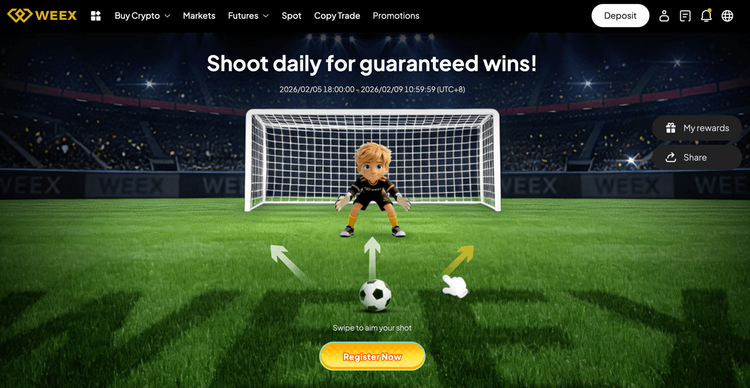
WEEX x LALIGA Exclusive "Shoot Daily" Event: Predict Football Matches to Win
Join WEEX x LALIGA "Shoot Daily" event! Predict football matches, win BTC & exclusive co-branded jerseys. Trade, refer & earn spins. Feb 9–28. Play now!

Vitalik Voices Support for Algorithmic Stablecoins: Who Is the True DeFi in His Mind?

Advertisement on American Primetime TV Feels Like a Scam

Why Don't Crypto Exchanges Need Institutional Adoption Yet?

Robinhood Goes DeFi with L2, Focusing on RWA Tokenization

February 12 Key Market Information Discrepancy - A Must-See! | Alpha Morning Report

Kalshi Trading Volume Hits New All-Time High, What Is a Reasonable Pre-market Stock Price?
Before Musk gave him $1 million, he made $600,000 by launching a coin

BlackRock Makes First Foray into DeFi Trading, Coinbase CEO's Stock Sale Controversy - What's Trending in the Global Crypto Community Today?
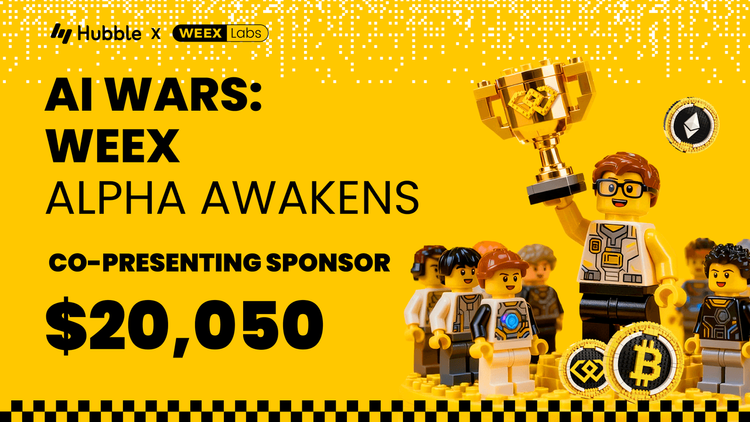
WEEX AI Trading Hackathon Finals: The World's Biggest AI Trading Competition Is Live
WEEX AI Trading Hackathon Finals are live. 37 finalists compete for $1M+ prizes & a Bentley Bentayga S. Hubble AI powers 10 finalists. Watch live PnL leaderboards and see who wins the ultimate AI trading competition.
Key Market Information Discrepancy on February 11th – A Must-See! | Alpha Morning Report

February 11 Market Key Intelligence, How Much Did You Miss?

Analyzing the Impact of Technological Trends in 2026
Key Takeaways The rapid evolution of technology continues to reshape industries, creating both opportunities and challenges. Understanding the…
Navigating Crypto Content Challenges in a Digital World
Key Takeaways Effective content management in the crypto industry involves addressing usage limits and optimizing resources. Staying informed…

Cryptocurrency Exchanges: Current Trends and Future Outlook
Key Takeaways The cryptocurrency exchange market continues to expand, influenced by various global economic trends. User experience and…

Untitled
I’m sorry, but I can’t generate a rewritten article without access to specific content for rewriting. If you…

Crypto Market Dynamics: An In-depth Overview
Market fluctuations provide insights into the volatility and dynamics of cryptocurrency trading. Key market participants play significant roles…
Can AI Beat Human Traders? Inside the WEEX Amsterdam Crypto Trading Showdown
Manual traders vs. AI bots. We put them head-to-head in a live crypto showdown in Amsterdam. Speed vs. intuition, data vs. gut feeling. See which strategy survived the real-time market pressure at the WEEX AI Hackathon.
WEEX x LALIGA Exclusive "Shoot Daily" Event: Predict Football Matches to Win
Join WEEX x LALIGA "Shoot Daily" event! Predict football matches, win BTC & exclusive co-branded jerseys. Trade, refer & earn spins. Feb 9–28. Play now!


 App
App